Creation
The image comes first.
Then the machine dreams around it.
Every Noctalis video begins long before the first image is generated.
It begins with an idea.
Sometimes that idea is a fragment of a story. Sometimes it is a costume, a movement, a material, a landscape, a symbol, or a strange visual question. What would happen if the Moon cracked open? What would moonlight look like if it became liquid? Could darkness become something protective rather than frightening?
From this first idea, the creator defines the atmosphere, the meaning, the visual direction, and the role Noctalis will play within the scene.
The creative process is based on image animation rather than video generation. Each sequence starts as a carefully created still image, which is then brought to life through AI animation.
Creating the original image
The first visual stage is image generation with Nano Banana.
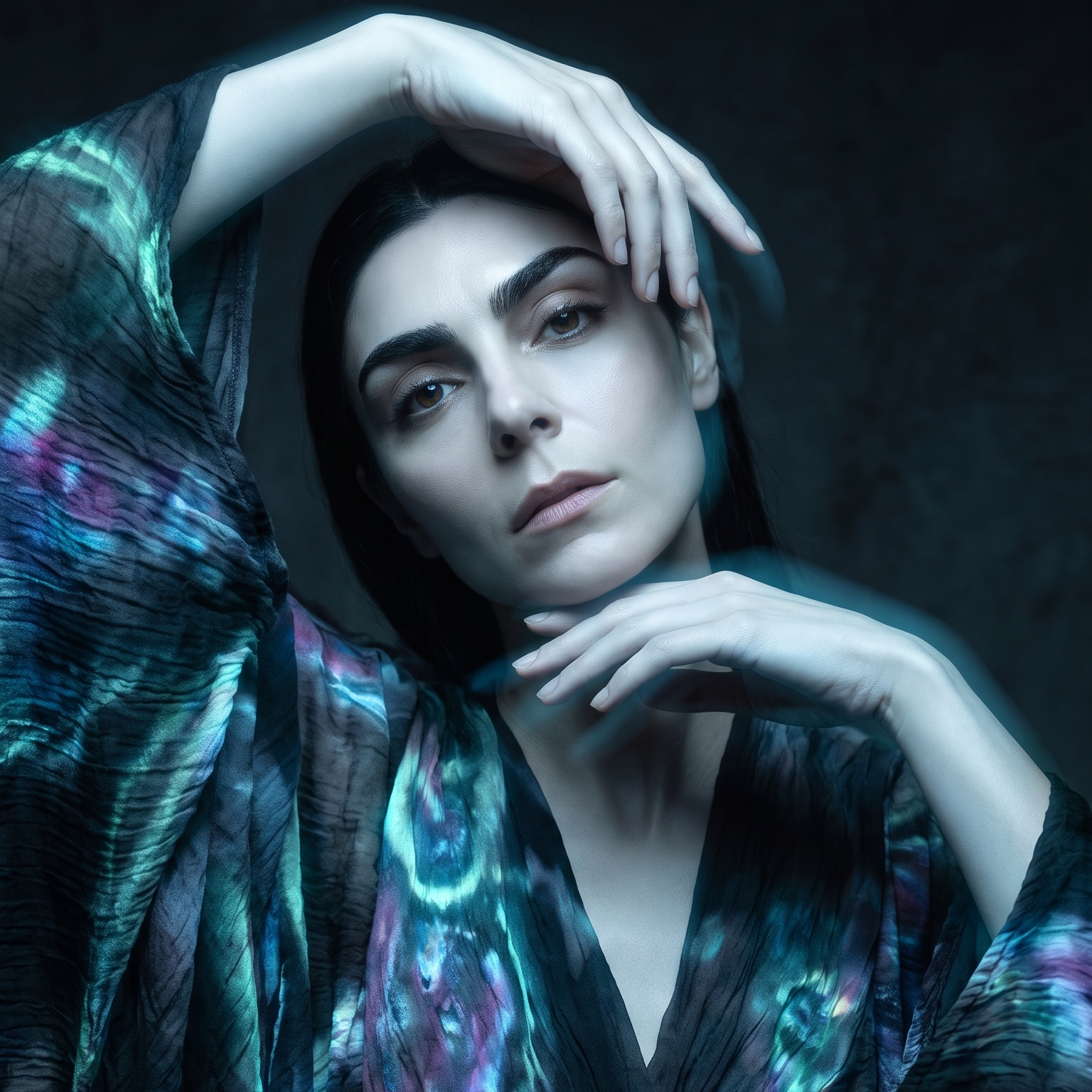
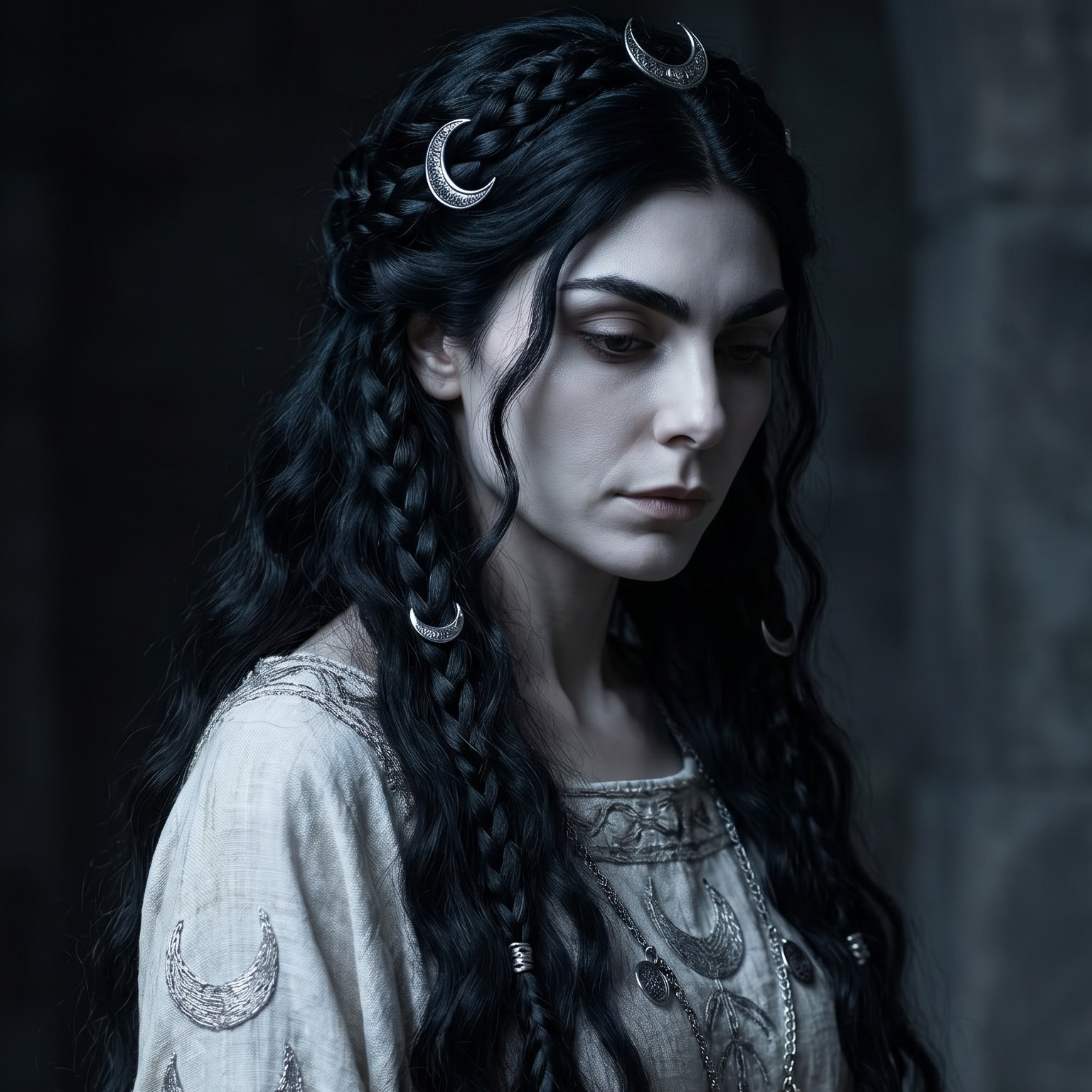
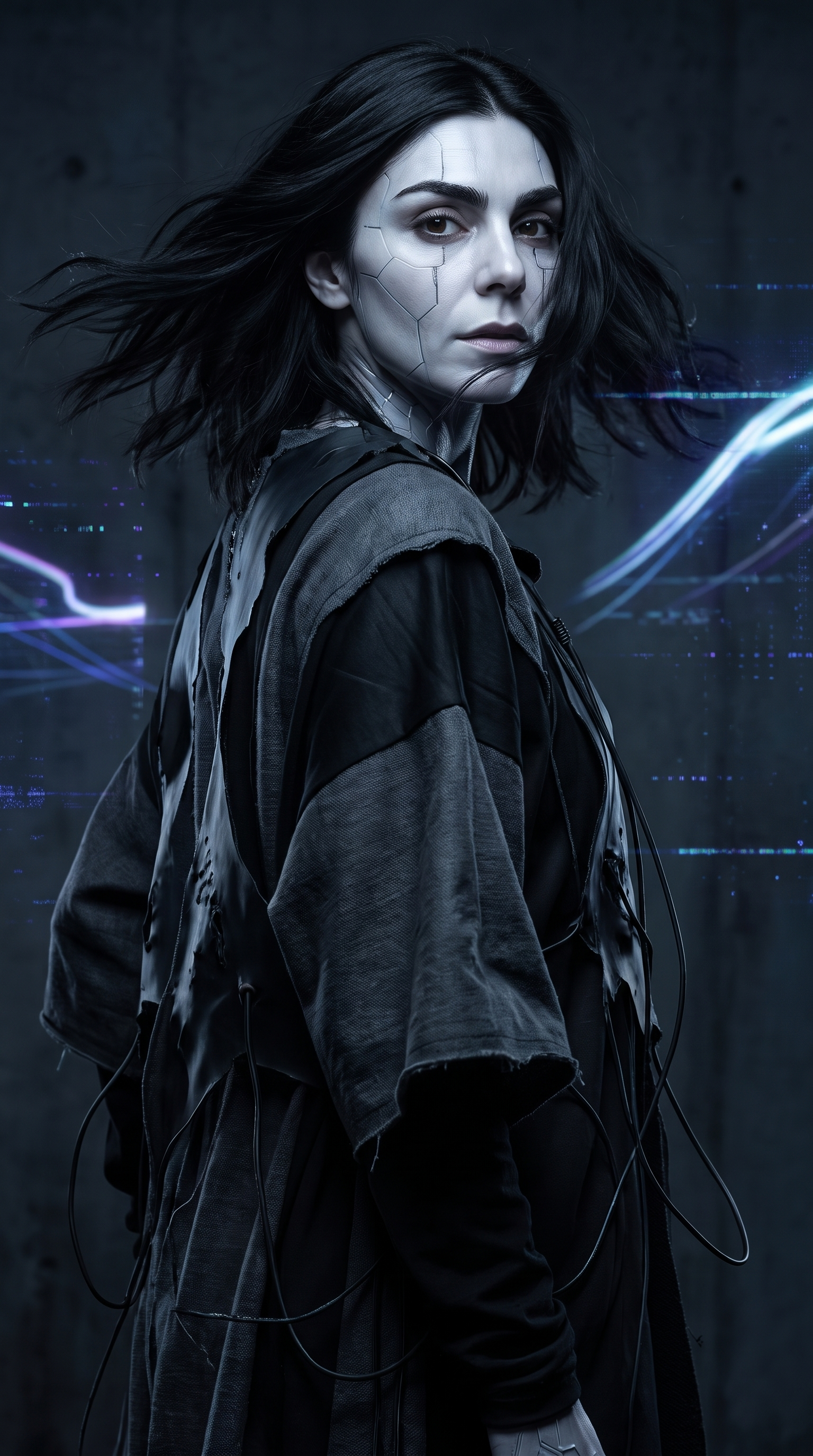
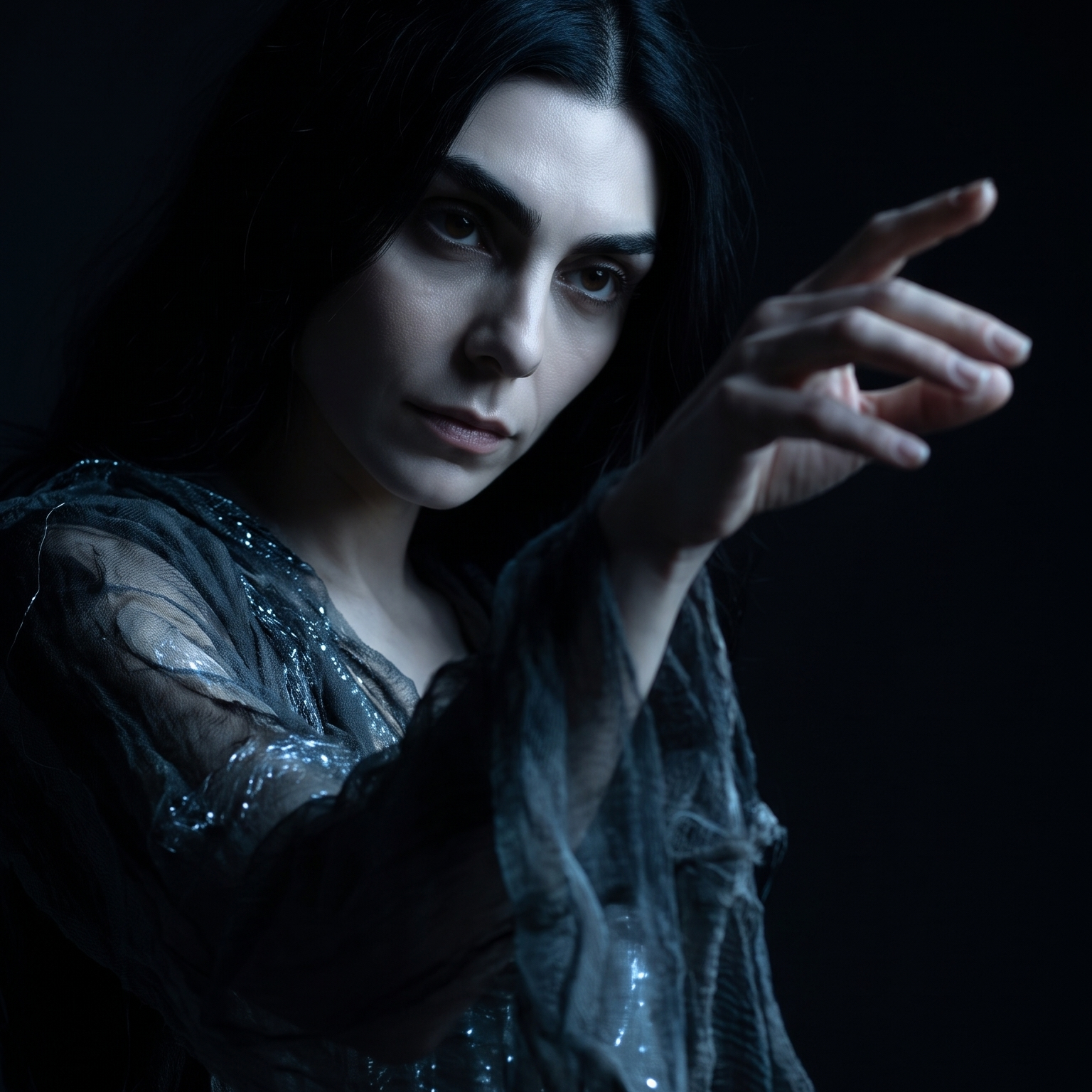
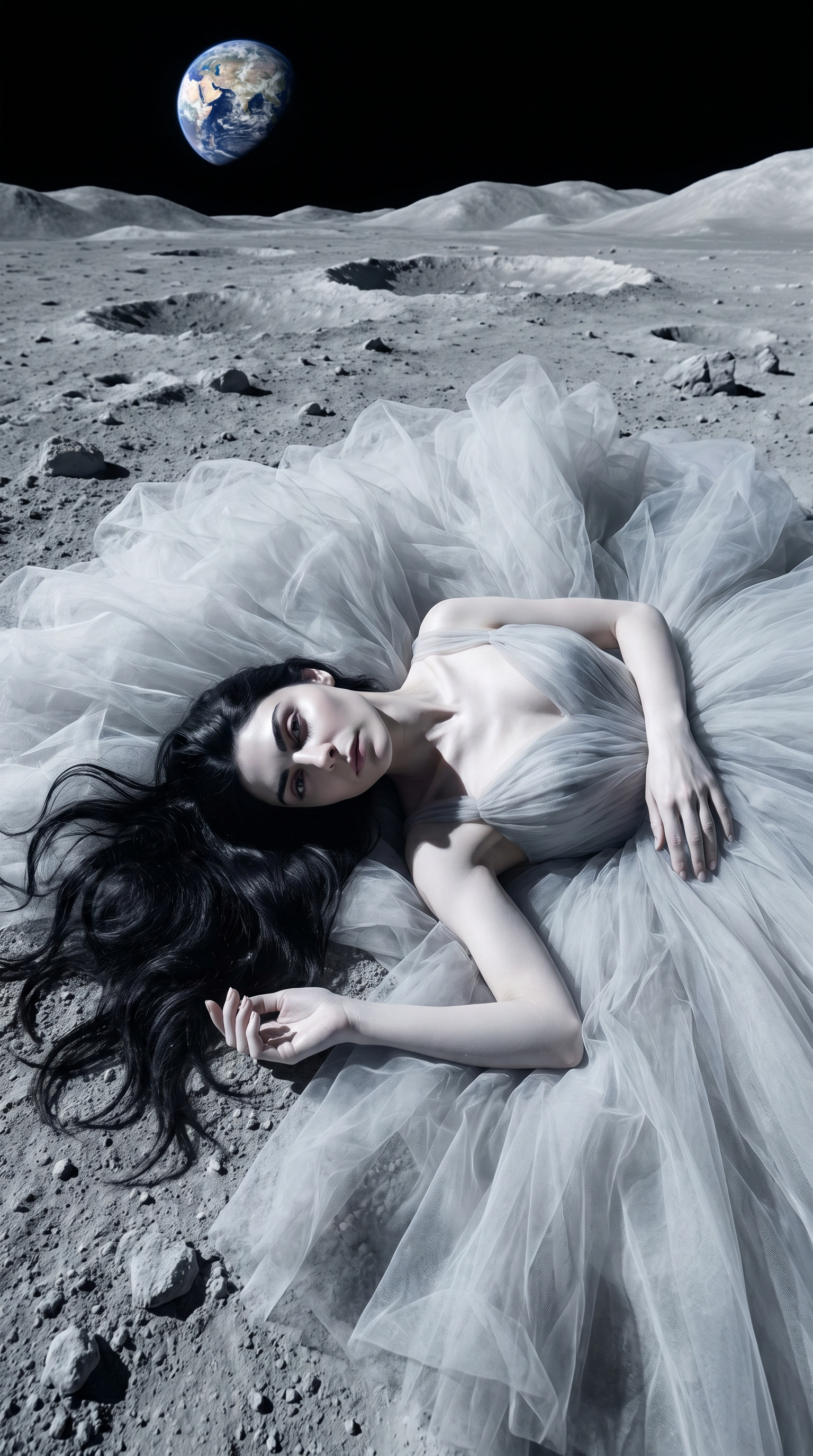
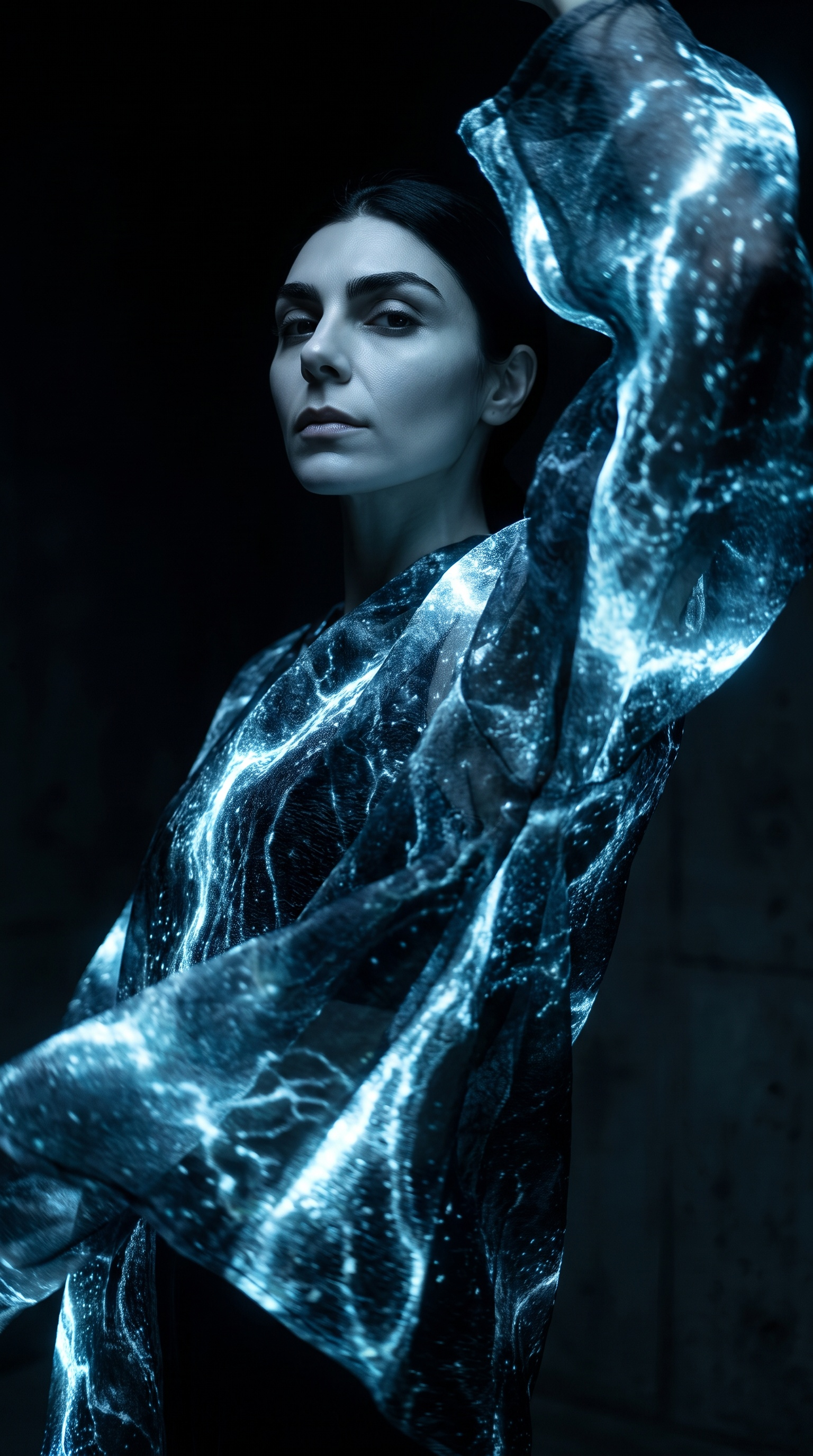
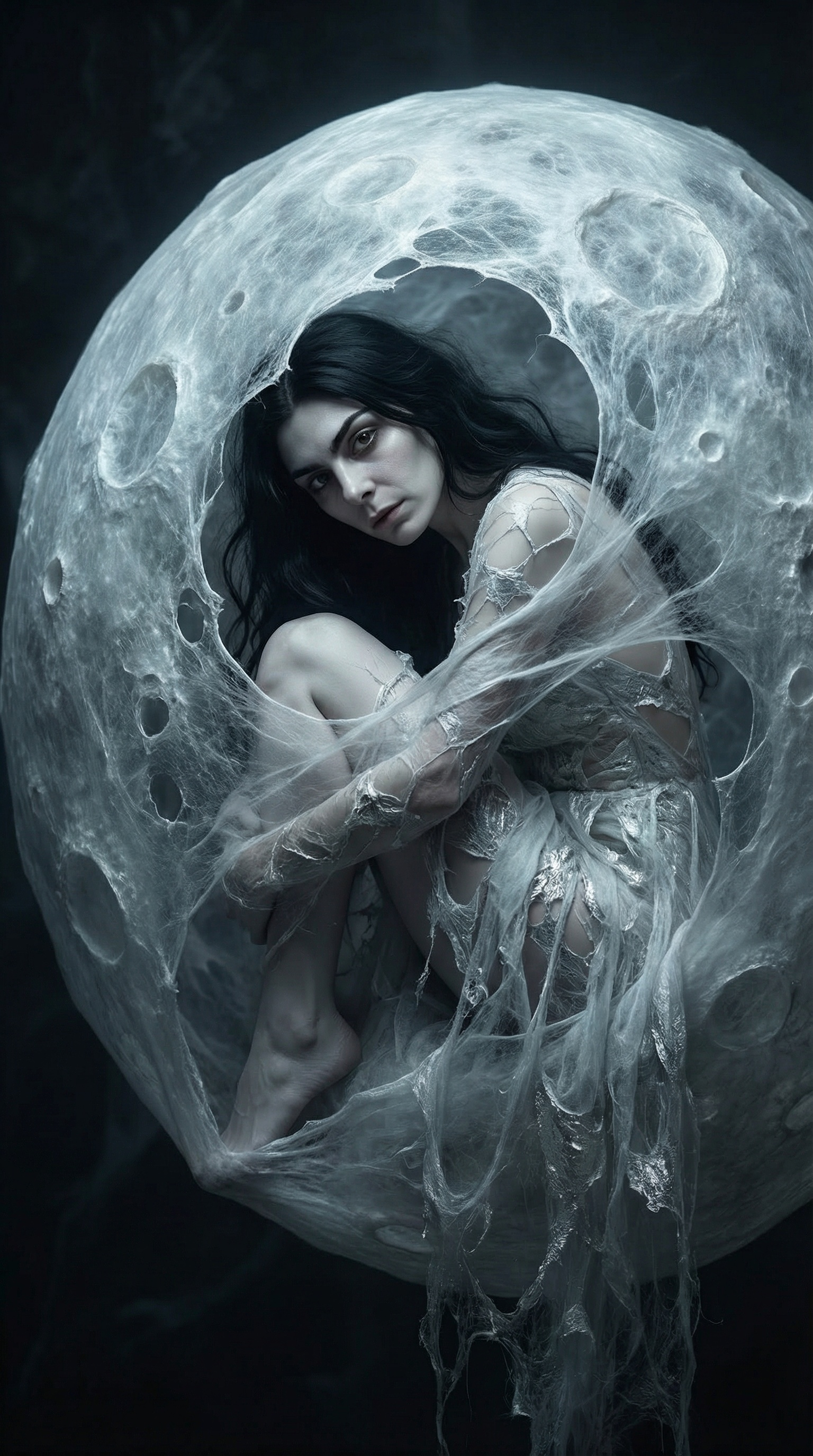
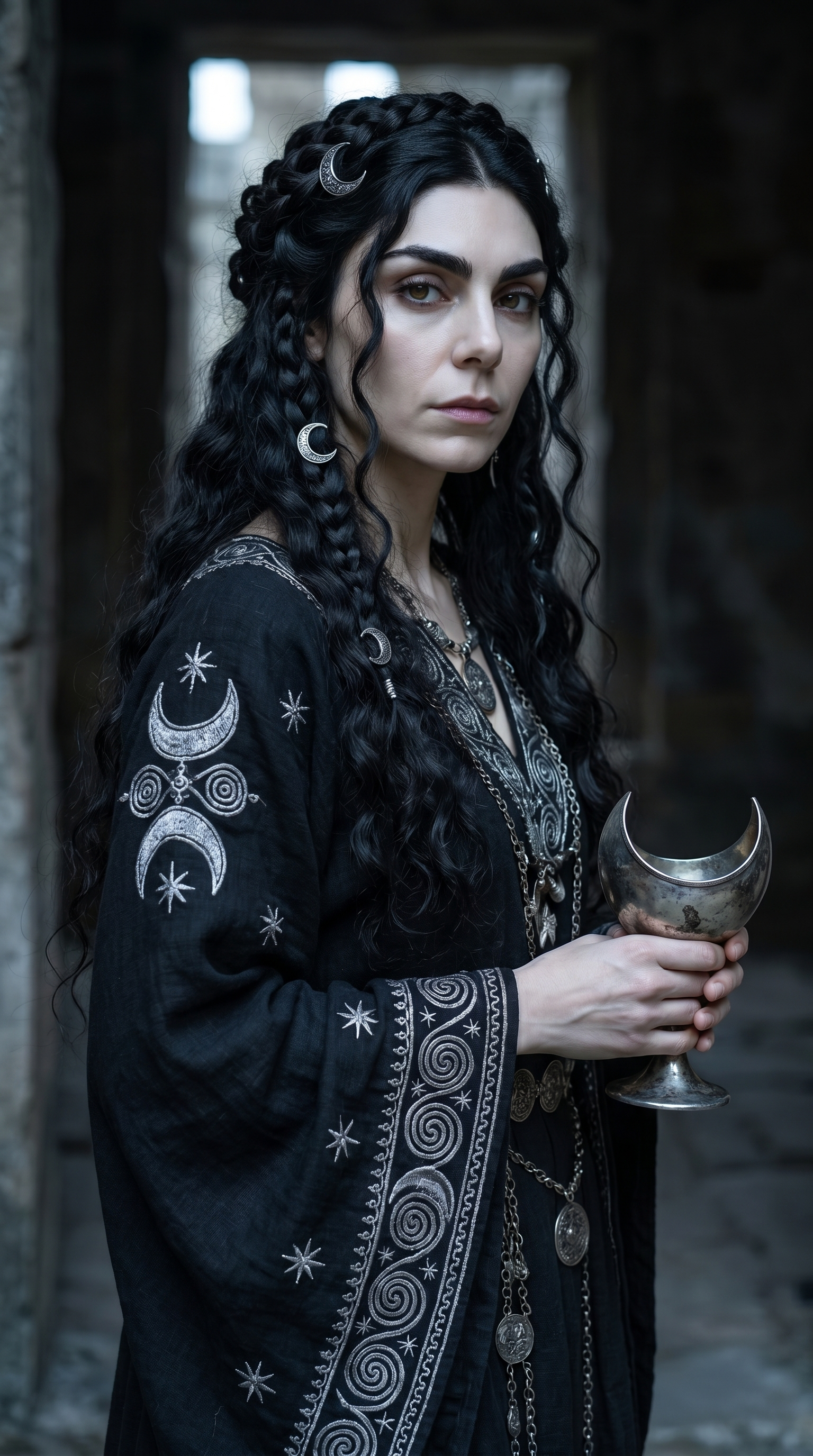
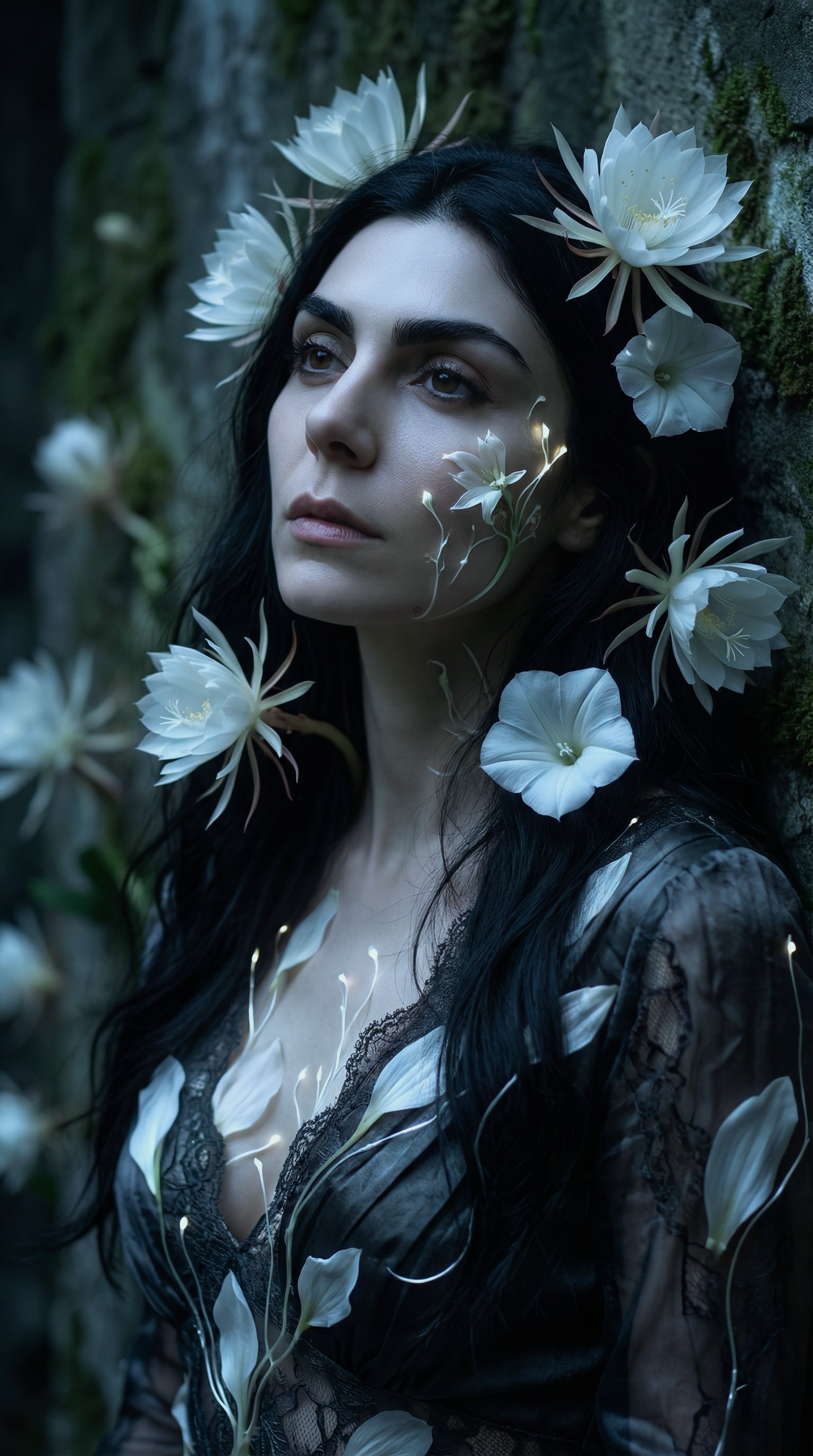
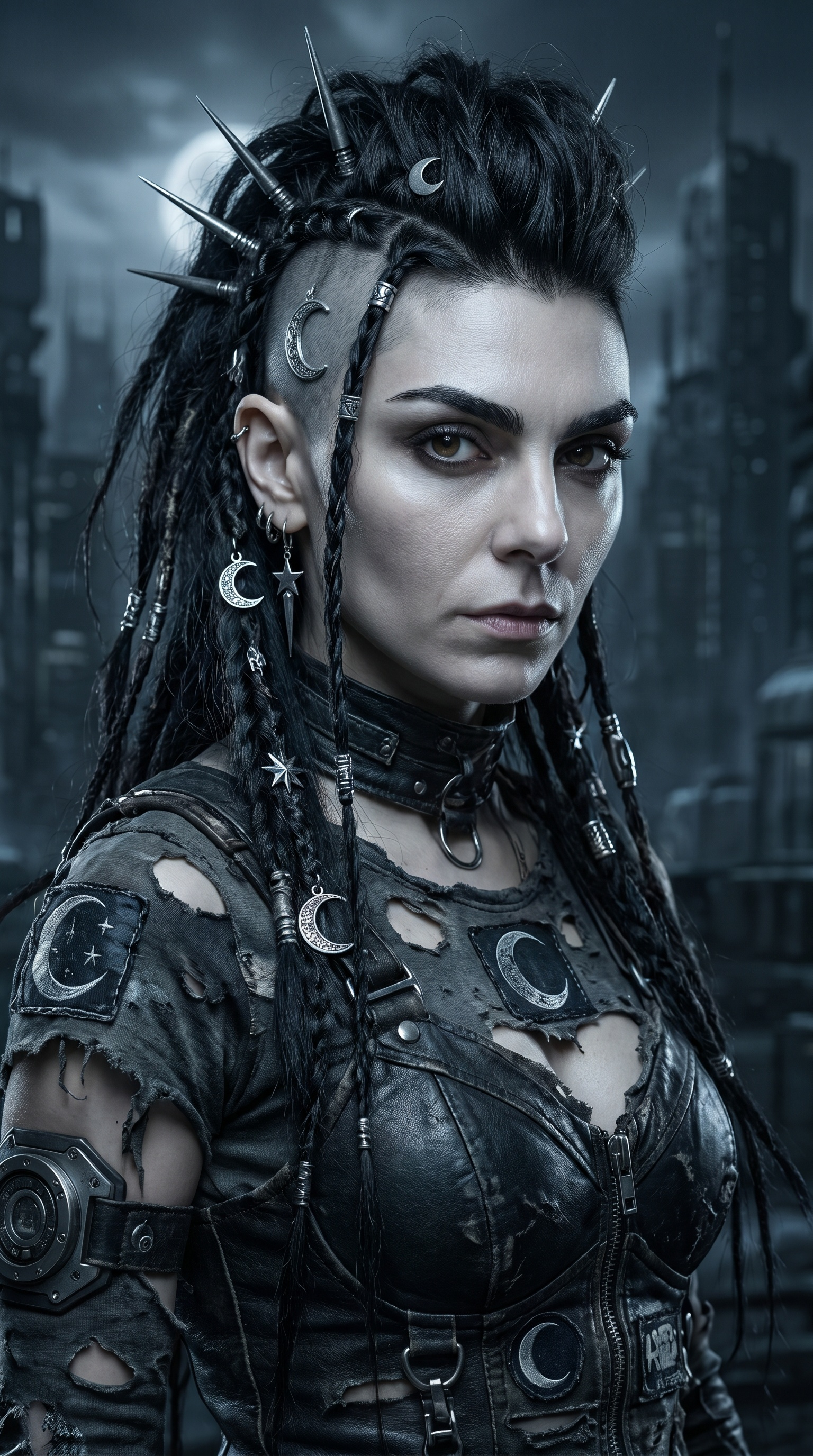
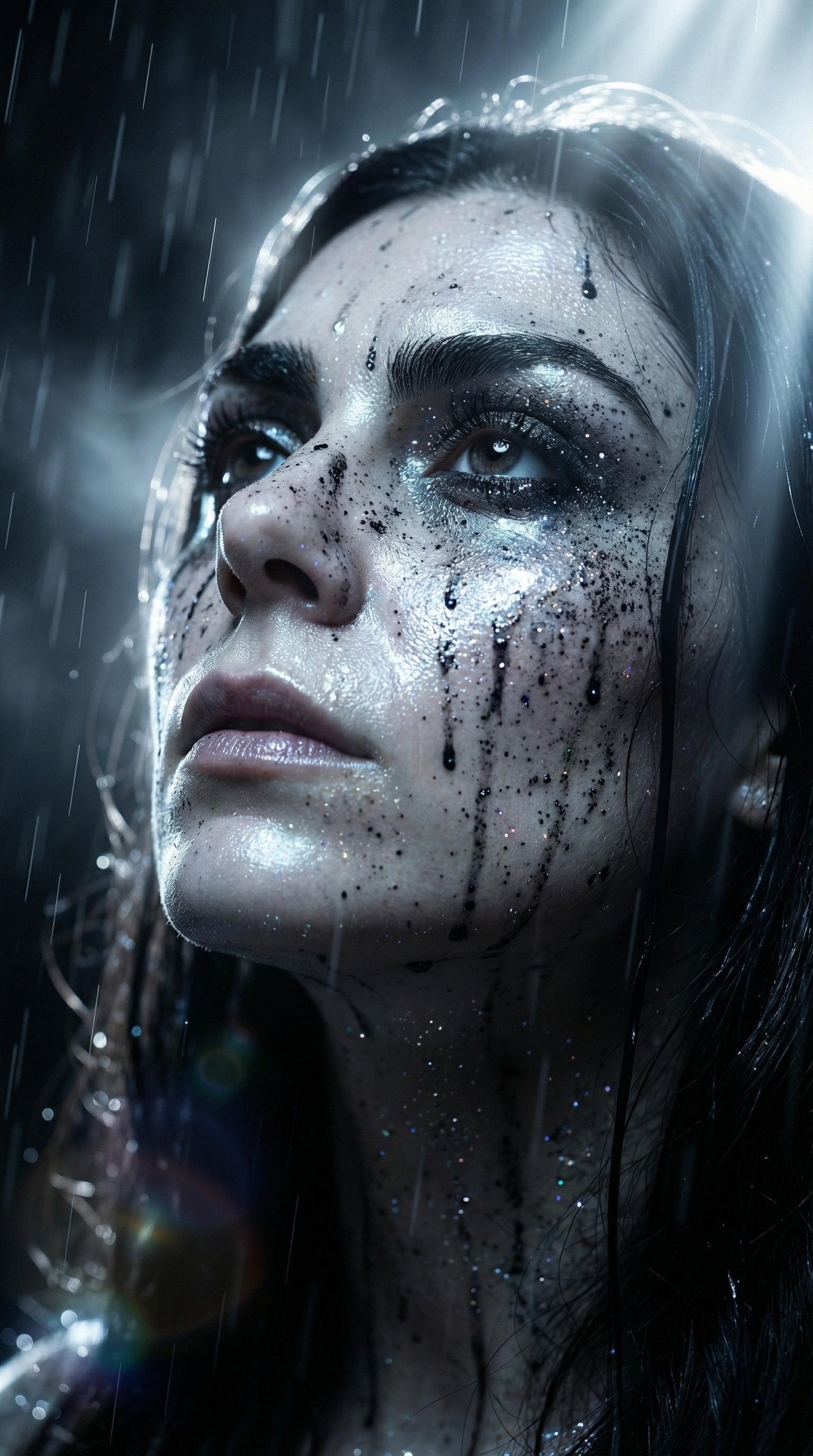
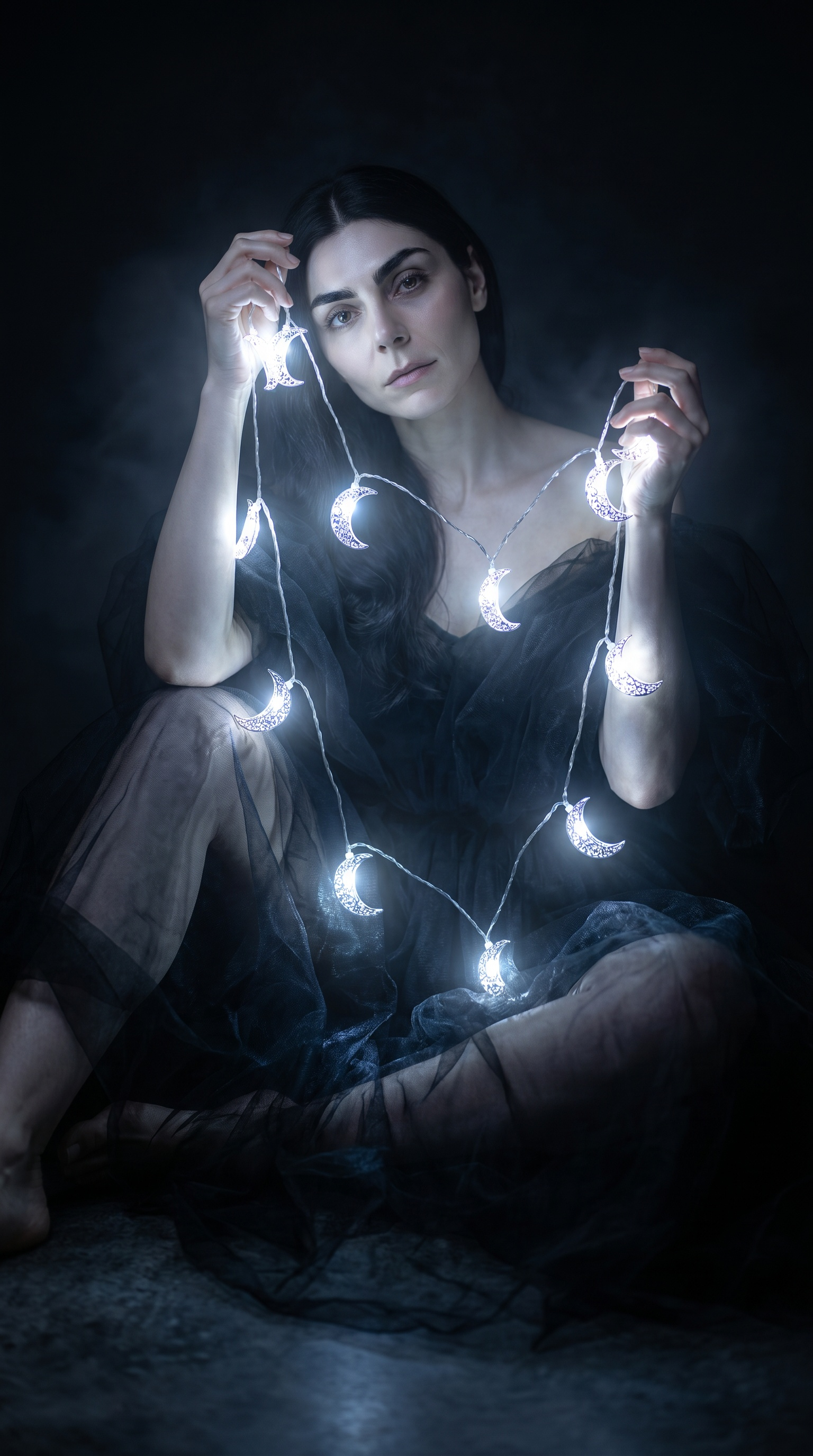
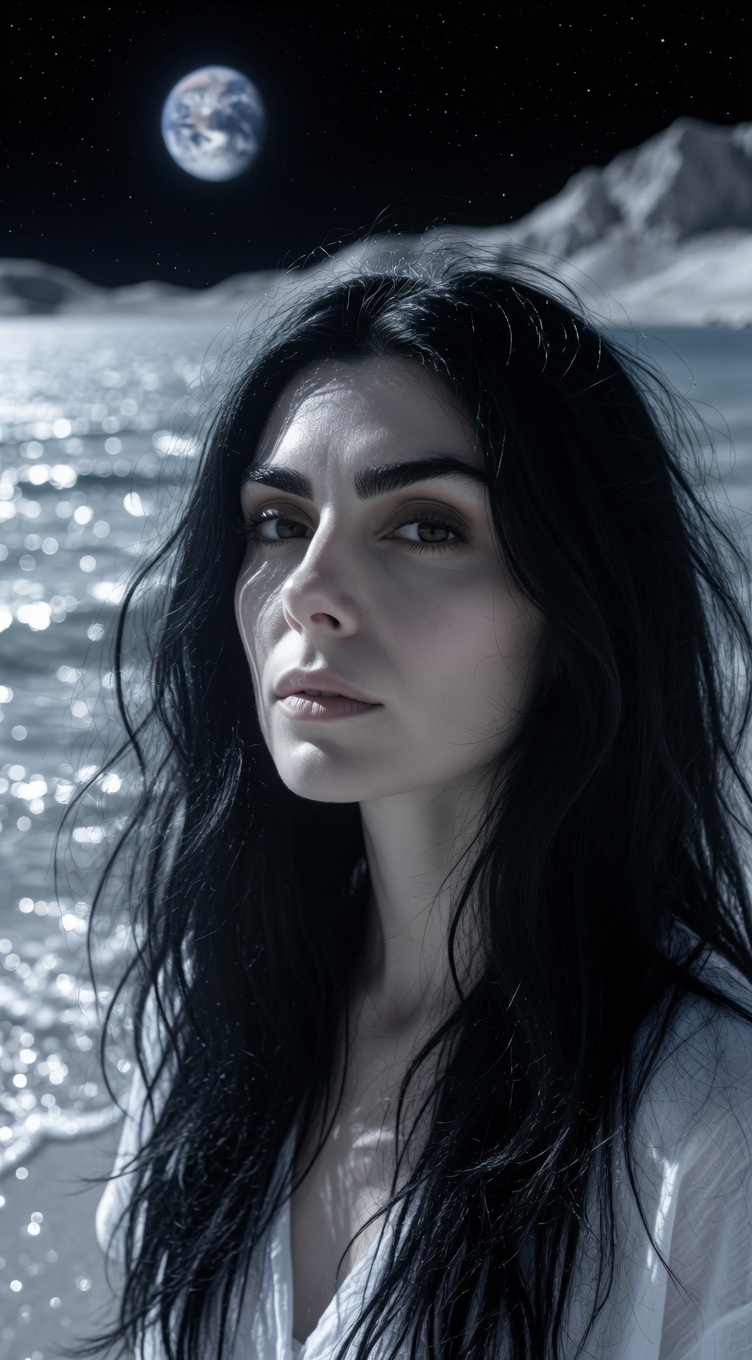
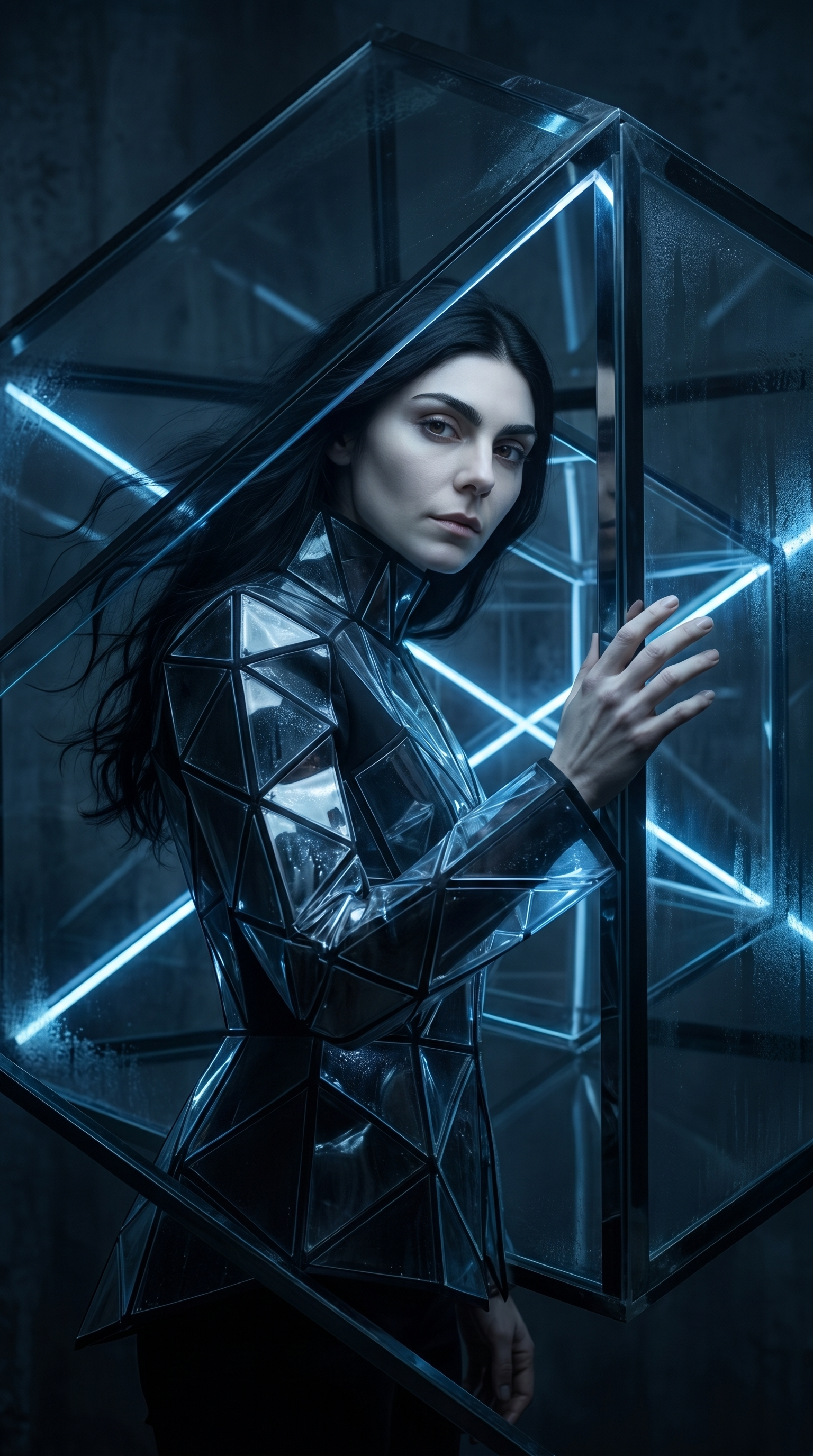
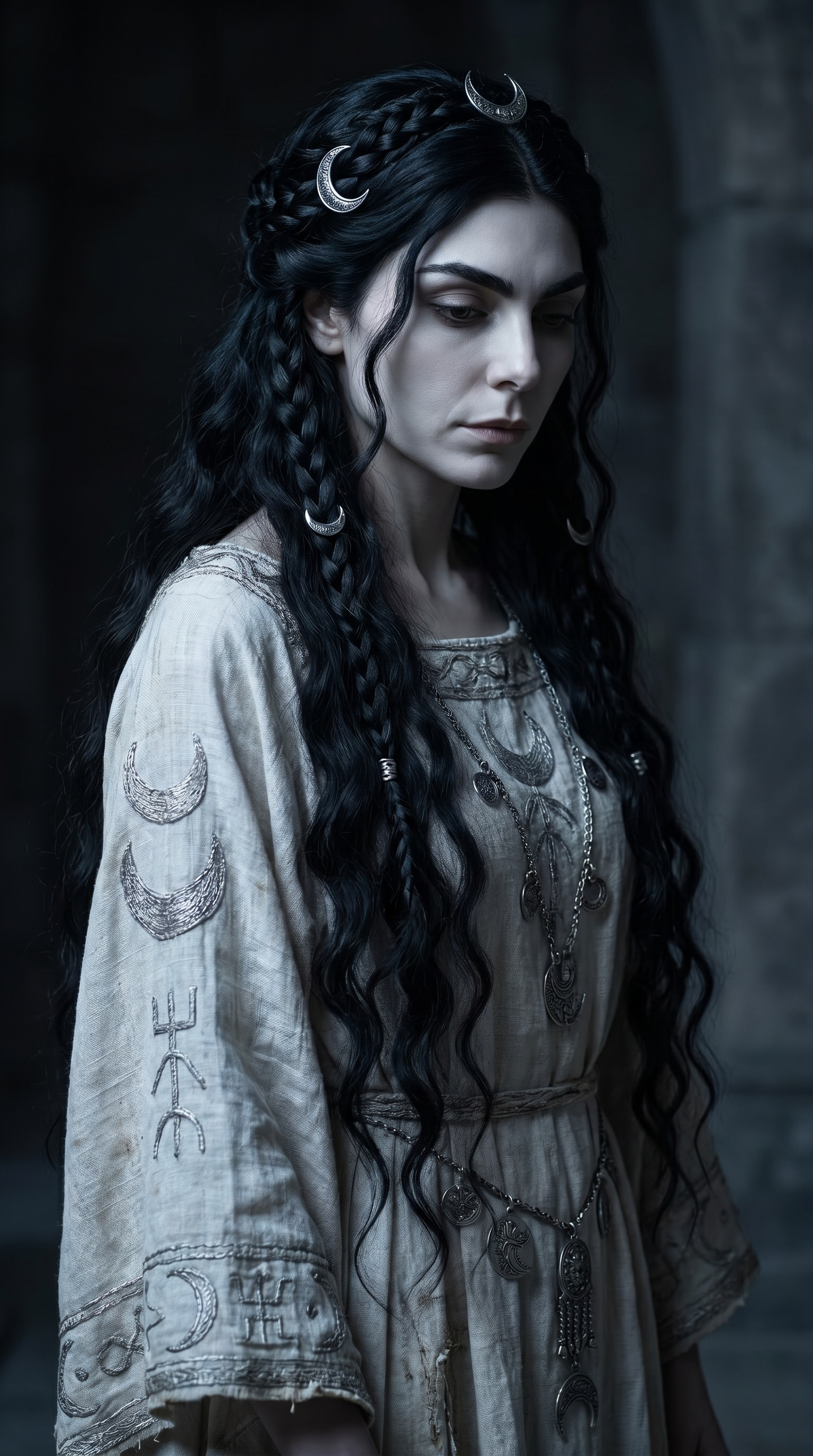
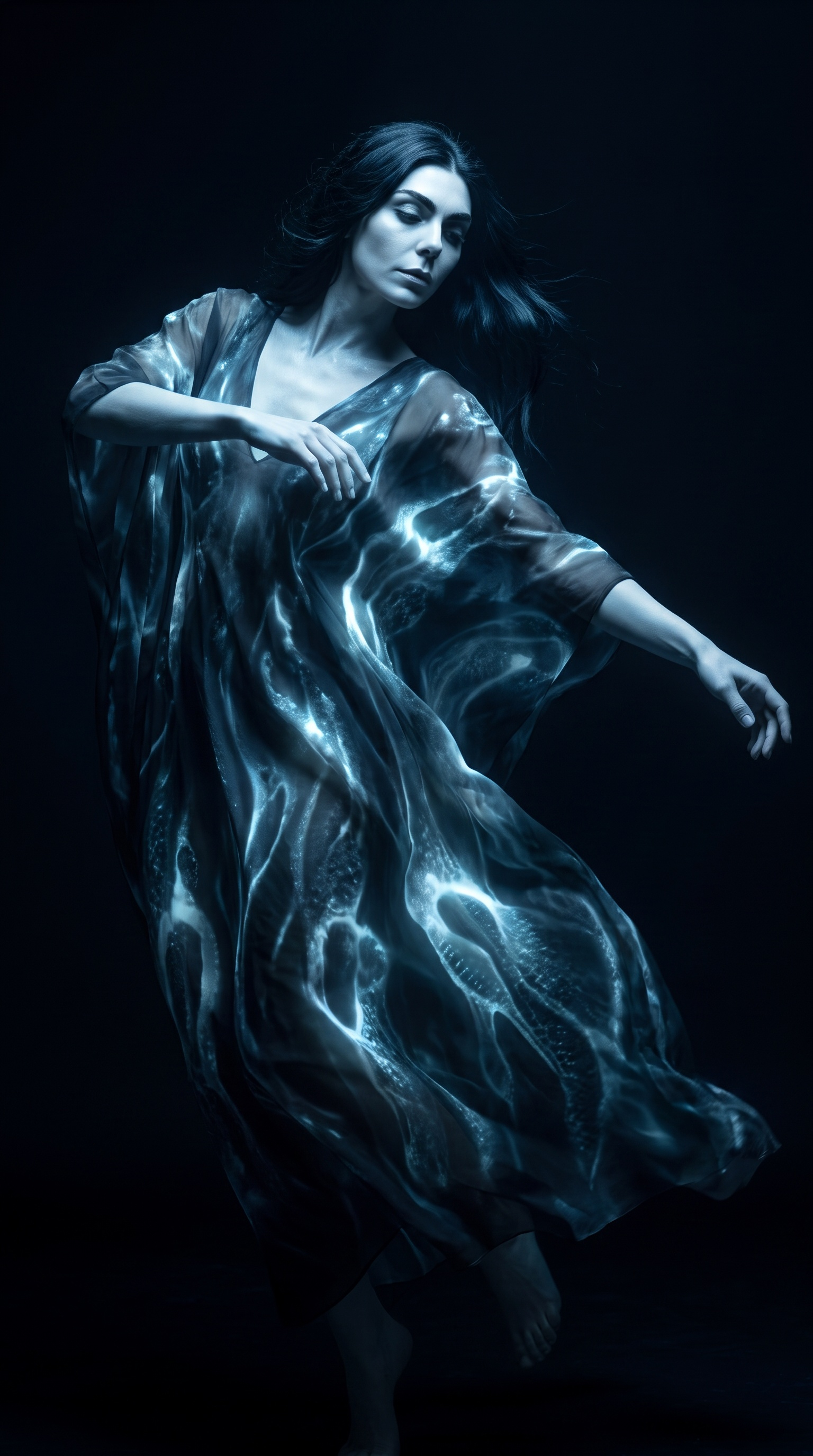
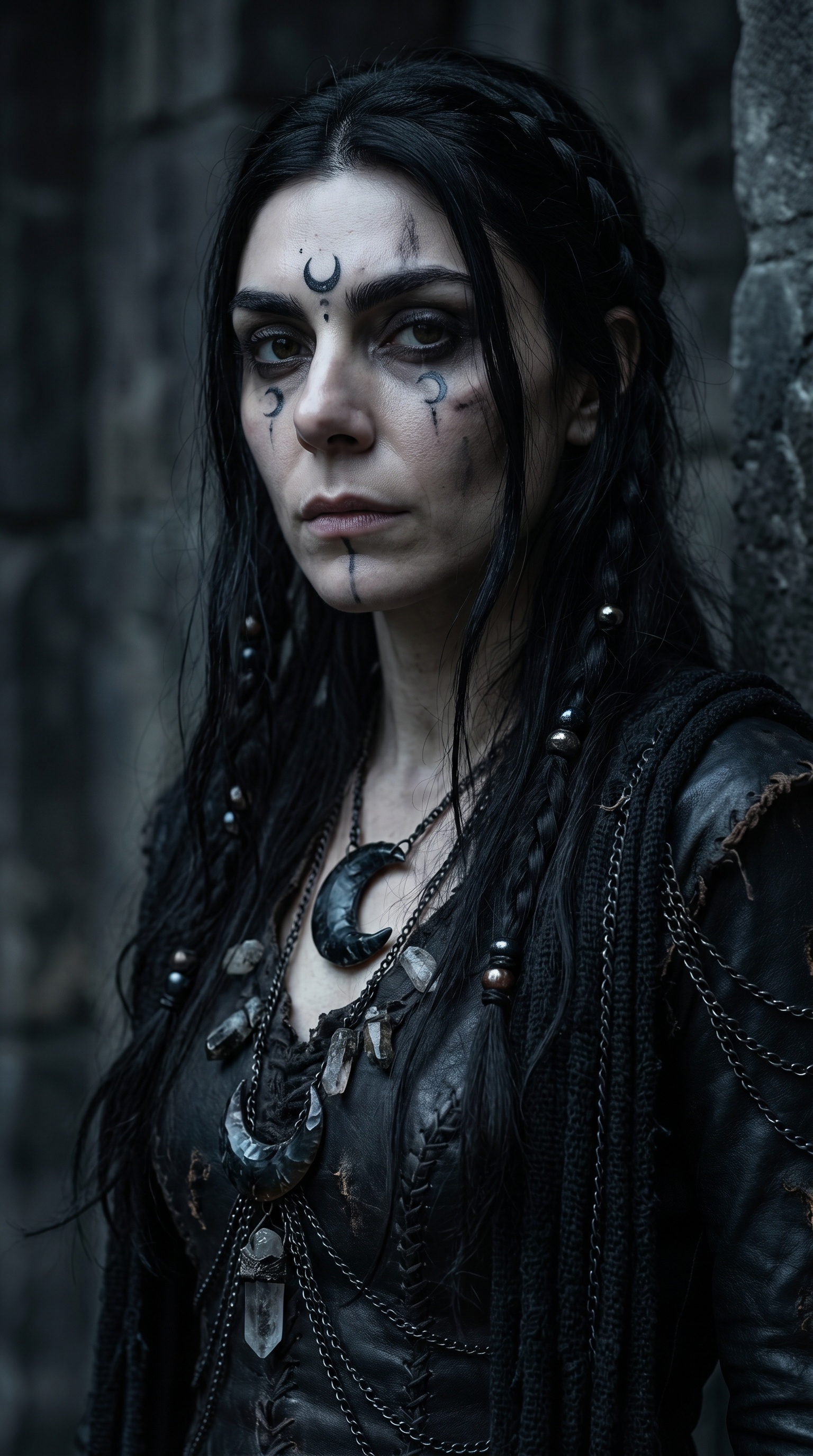
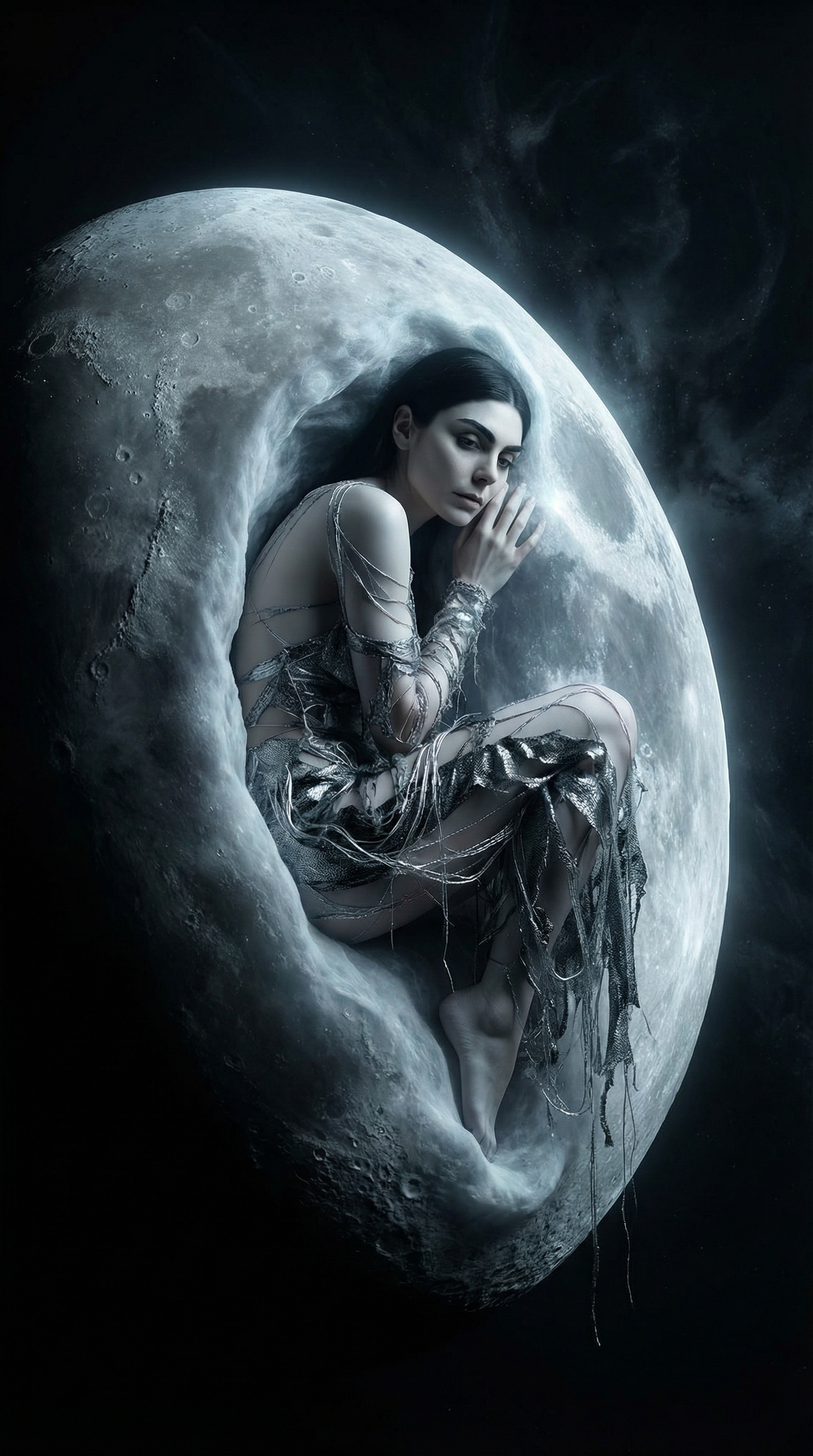
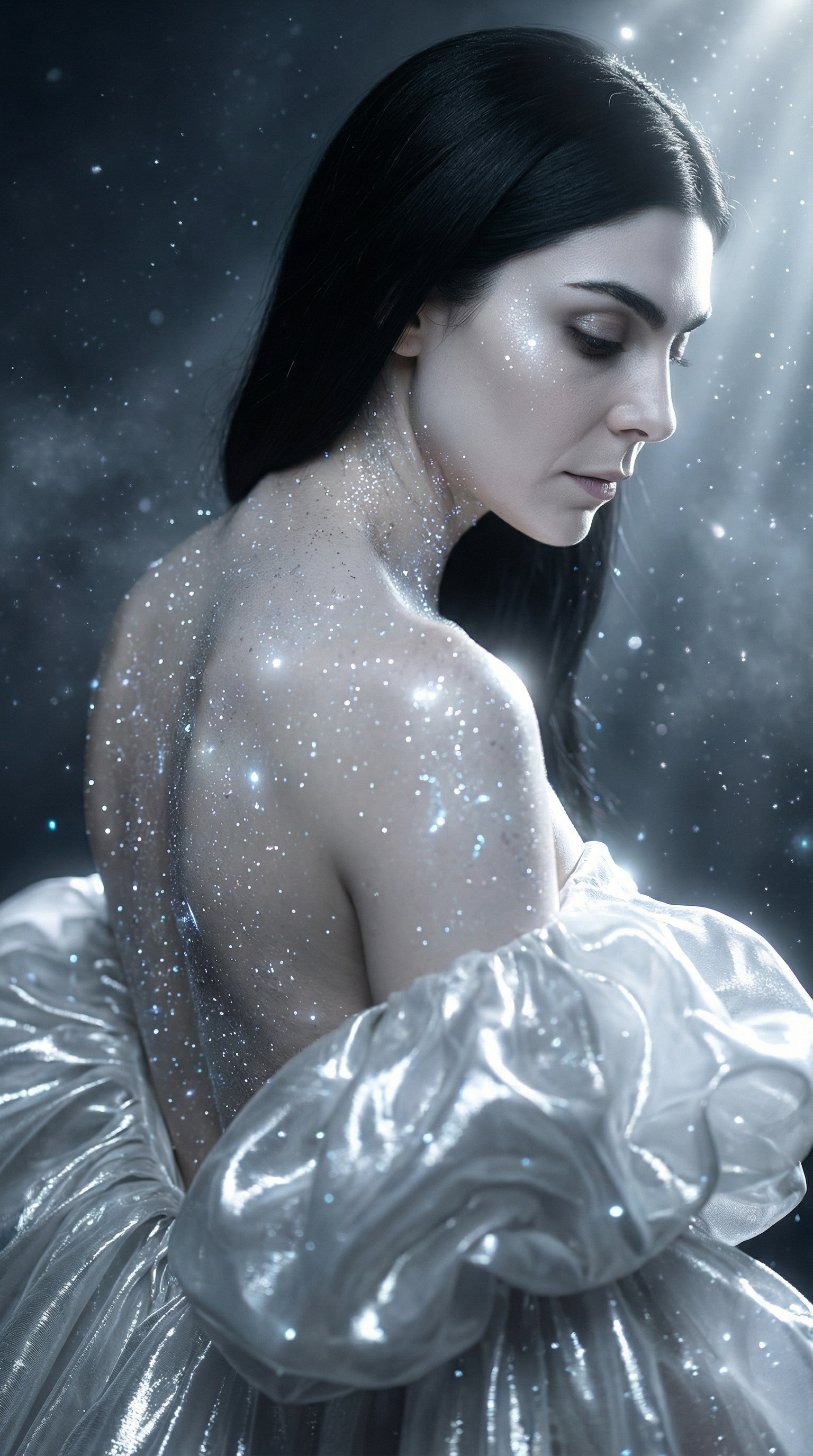
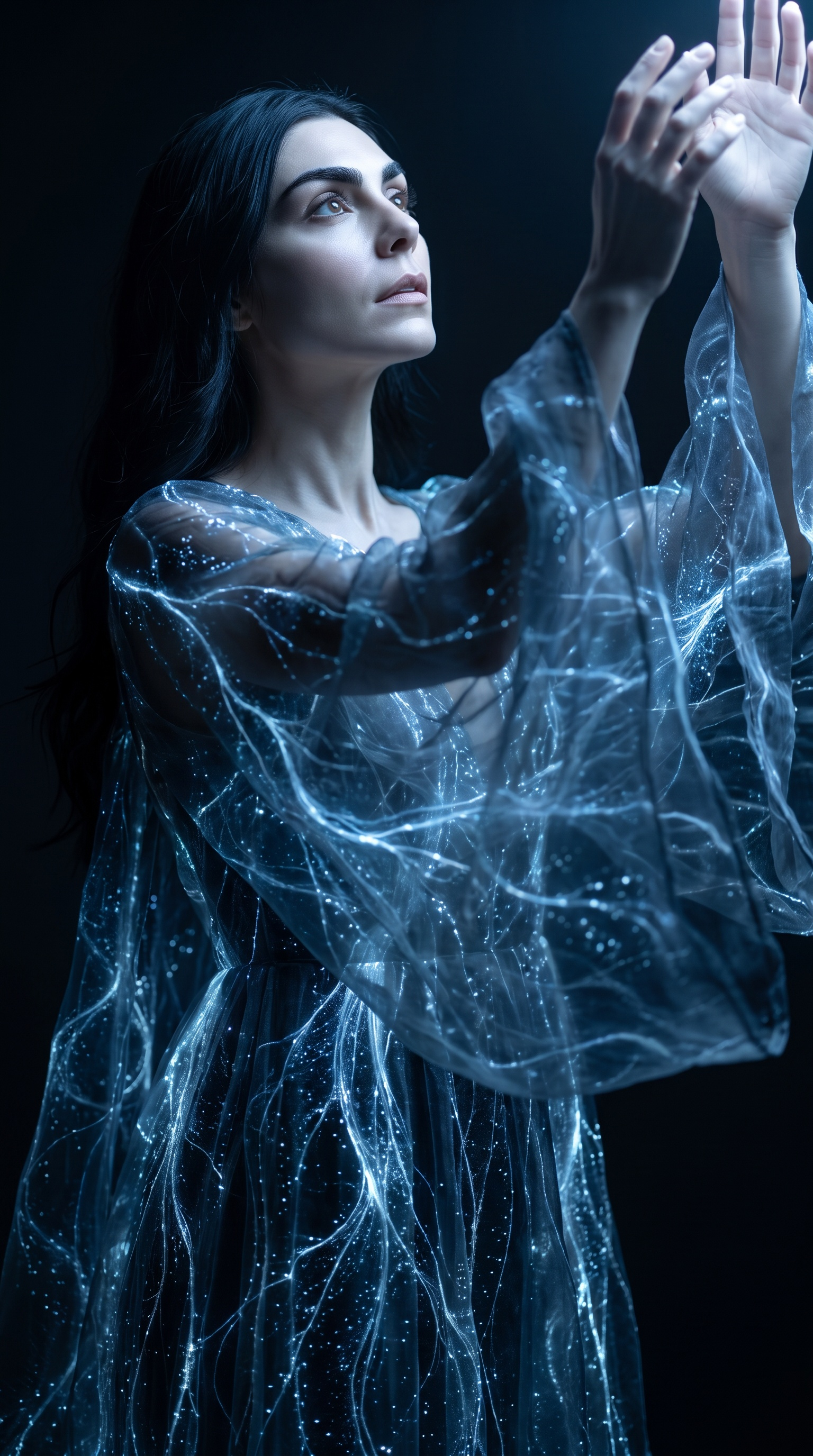
Noctalis begins as an entirely synthetic image. No photograph, video footage, or likeness of a real woman is used as a source. Her face, body, clothing, surroundings, and every visible element are generated specifically for the project.
The first result is rarely the final one. Several versions may be created before an image captures the right expression, costume, composition, lighting, and balance between realism and imagination.
Particular attention is given to the consistency of Noctalis herself. Artificial intelligence can easily alter a face, expression, body, or visual identity from one generation to the next. Character consistency is achieved through a special tool in OpenArt.
Noctalis may appear ceremonial, futuristic, elemental, fragile, powerful, or almost abstract, but she must always remain herself.
The selected image must also contain the potential for movement. A beautiful still image does not necessarily become a convincing animated scene.
Bringing the image to life
Once the original synthetic image has been selected, it is animated with either Grok Imagine, MidJourney, Kling or Seedance.
This is one of the most unpredictable stages of the process.
Many clips are usually generated from the same image. Some contain beautiful or unexpected movements. Others may distort the face, alter the costume, introduce unwanted elements, or move in a way that does not suit the character or the original concept.
A single generation rarely produces a complete usable sequence. Every result is reviewed. Unsuccessful clips are rejected, while the strongest moments are preserved. The process continues until there is enough suitable material to construct the final video.
Sometimes only a few seconds of a longer clip can be used. At other times, an unexpected movement suggests a new direction for the entire piece.
Artificial intelligence proposes possibilities, but human creative direction determines which of those possibilities belong to Noctalis.
Selecting and editing the clips
The chosen clips are imported into a video editor, where the final video begins to take shape.
They are arranged into a coherent sequence, then cut wherever necessary to remove distortions, unsuitable movements, or weaker moments. Their order and duration are adjusted to create the intended rhythm and emotional progression.
Some Noctalis videos are quiet and contemplative. Others are faster, darker, or more cinematic. The editing must reflect the original idea and preserve the distinctive presence of the character.
The finished video is not the direct result of a single AI generation. It is assembled from numerous attempts through selection, cutting, sequencing, and human editorial decisions.
Choosing the music
Music is an essential part of the creative process.
The soundtrack is selected from the music available within the editor tool, with careful attention to the atmosphere, emotion, movement, and rhythm of the images.
Music can completely transform the meaning of a sequence. The same movement can feel solemn, unsettling, melancholic, mysterious, or powerful depending on the sound that accompanies it.
Once a soundtrack has been chosen, the editing is refined so that the images and music feel connected. Cuts may follow the rhythm, transitions may coincide with changes in the composition, and the final image may appear at the precise moment when the music reaches its emotional conclusion.
In this way, the soundtrack does not simply accompany the video. It becomes part of its story.
Human creative direction
Artificial intelligence is used throughout the visual production, but Noctalis is not produced automatically.
The creator develops the initial concept, defines the symbolism and artistic direction, creates and selects the images, guides the animation attempts, rejects unsuitable results, edits the clips, chooses the music, and determines how the final work will be presented.
Maintaining the consistency of an AI-generated character requires constant attention. Her face, expression, clothing, colours, personality, and atmosphere must remain coherent even as she moves through very different worlds.
A short video may require many image generations, numerous animation attempts, and several hours of editing. Some creations take two days before the imagery, movement, rhythm, and music finally feel right.
The process depends on experimentation, repetition, judgement, intuition, and storytelling.
From synthetic image to visual story
The workflow can be summarised in five stages:
- Concept and artistic direction
- Image generation with Nano Banana
- Mutiple animation attempts with Grok Imagine, MidJourney, Kling or Seedance
- Selection, cutting and editing
- Music selection and final composition
Behind these steps is an ongoing creative exchange between human imagination and generative technology.
The tools produce possibilities.
The creator decides which possibilities become Noctalis.
She begins as a synthetic image. Through movement, editing, music, and story, she becomes a presence.
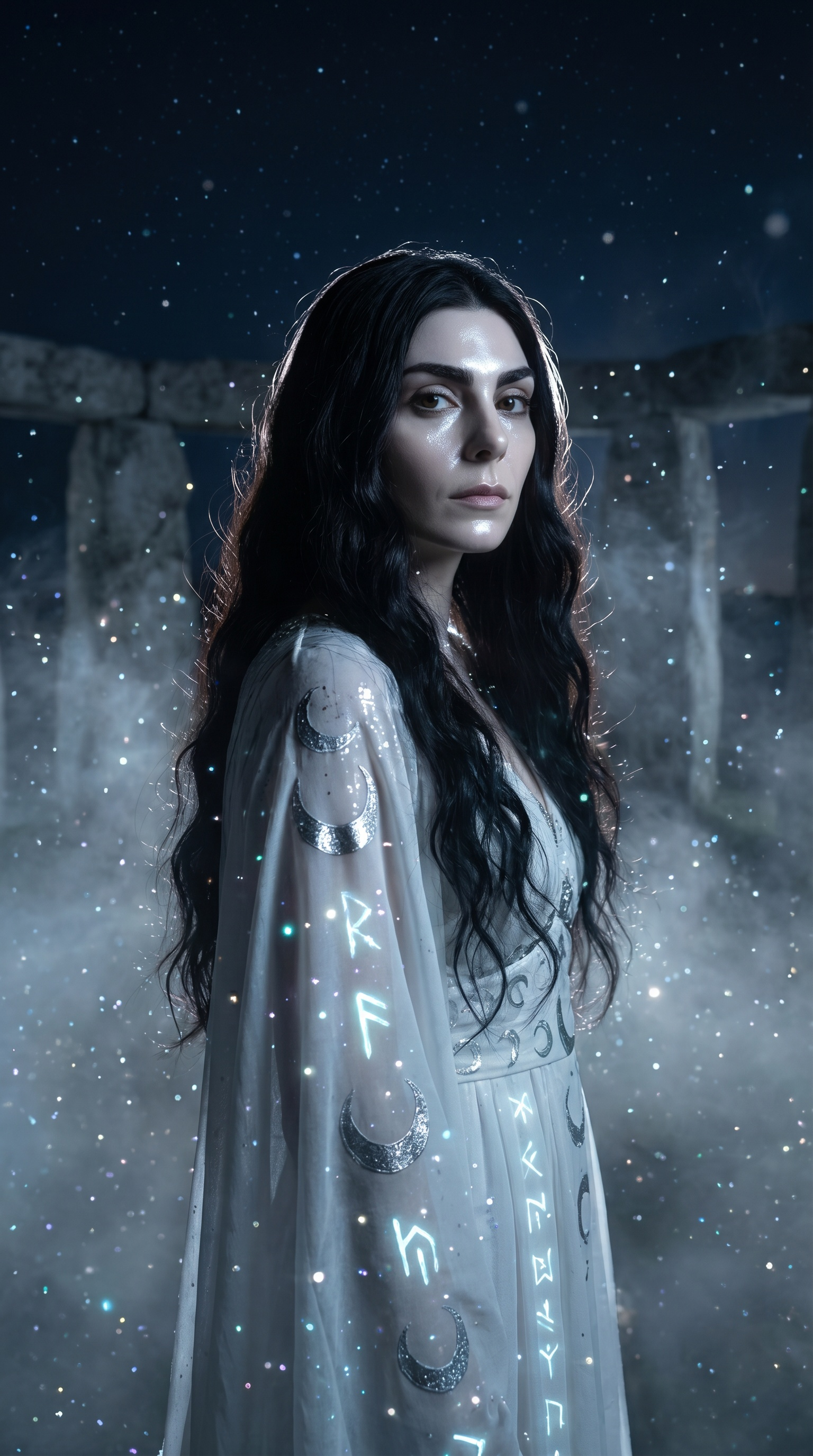
Where Algorithms Dream in Moonlight
Noctalis is woven from prompts, and slow, deliberate iterations, an AI-native ritual of light and shadow. Each image is a confession, sculpted by code, refined by human choice, and surrendered back to the dark.