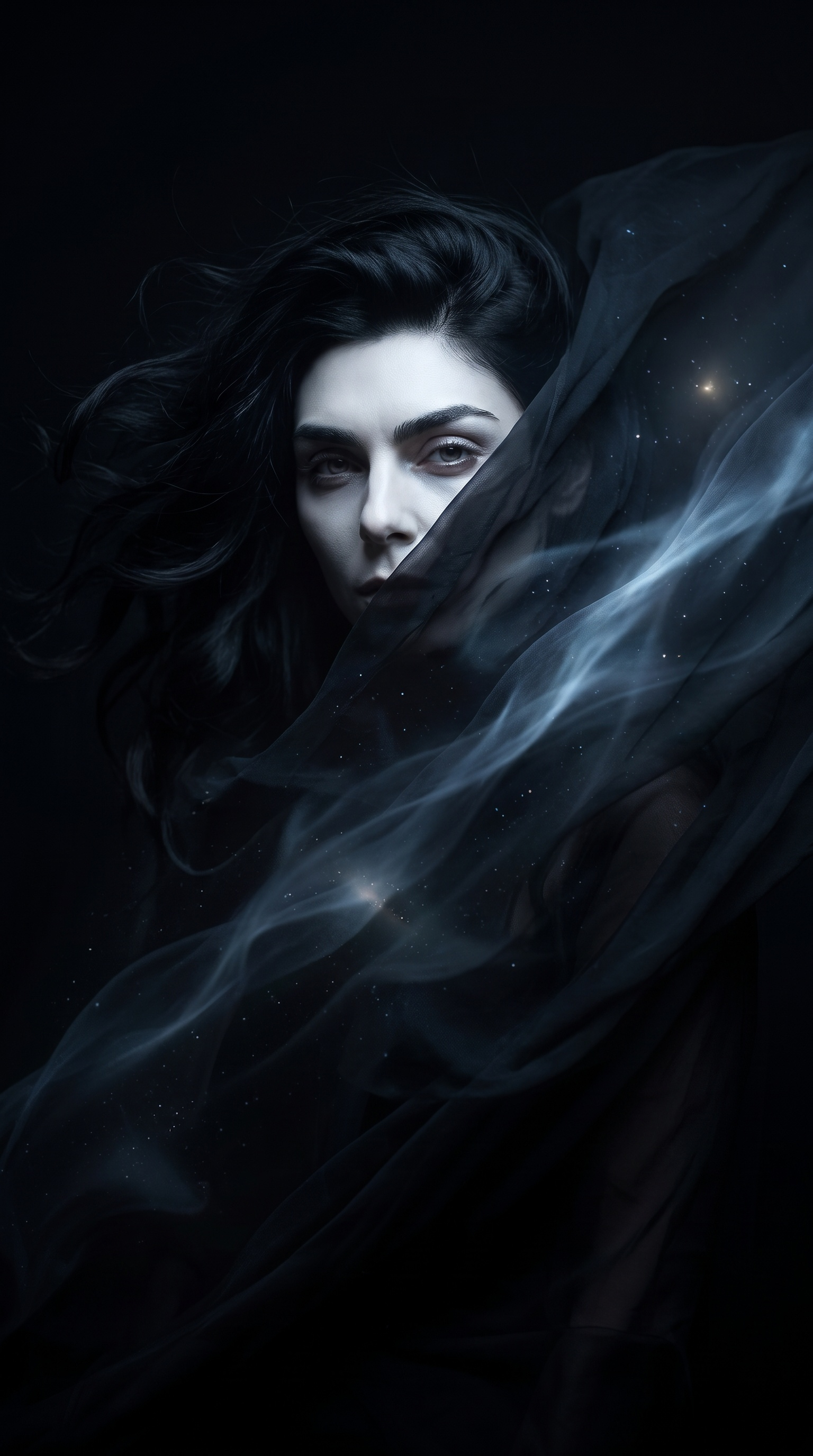
Noctalis Umbra
An AI-born presence moving through moonlight, darkness, memory and transformation.
A Name Between Light and Dark
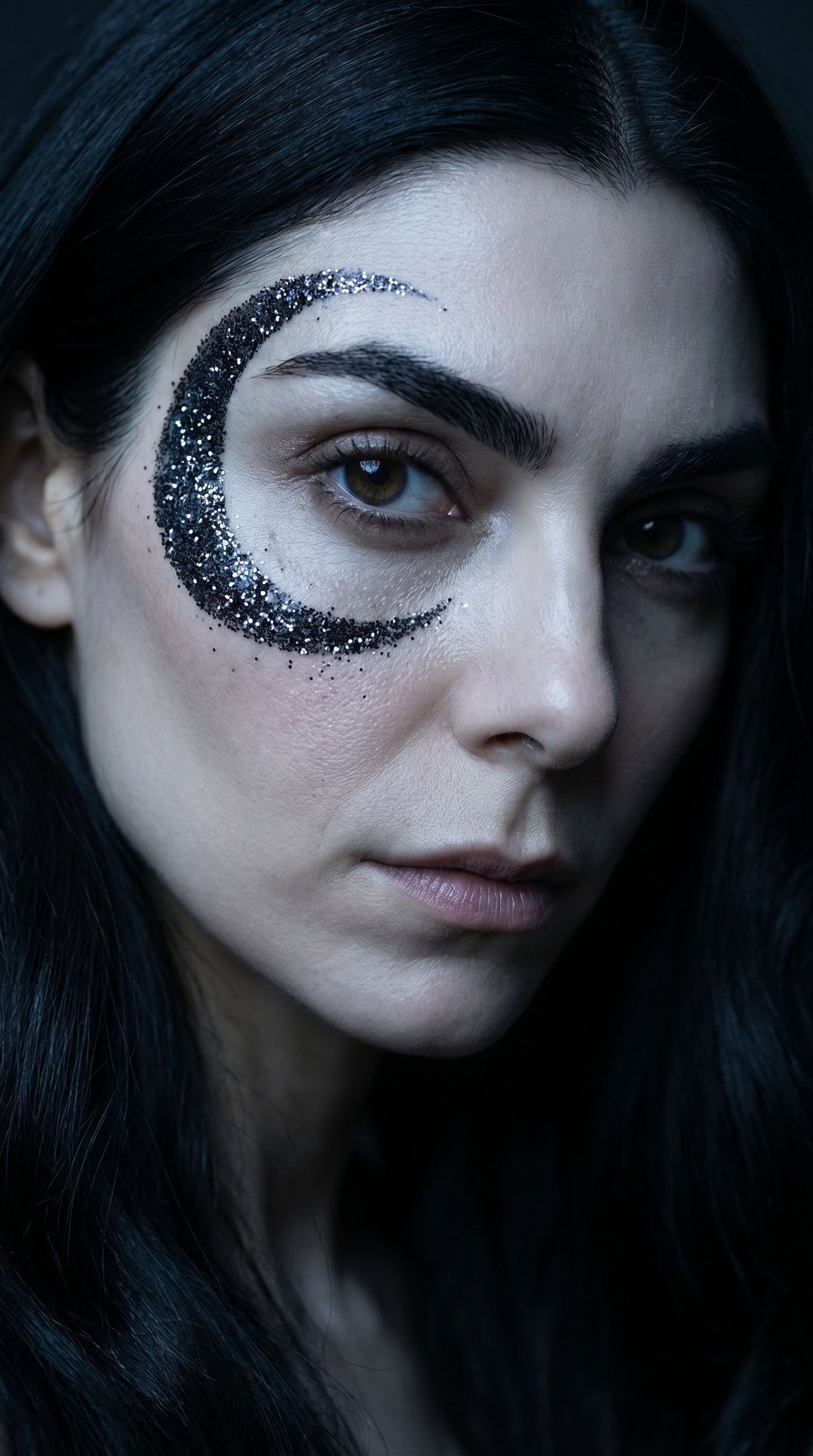
Noctalis echoes the Latin words nox and noctis, the night, while Umbra means shadow. Together, the name suggests a presence that belongs neither entirely to darkness nor to light, but to the space where the two meet.
Noctalis was created to challenge the idea that darkness is something negative. In her world, darkness is not emptiness, fear or evil. It is shelter, silence and possibility. It is the place where the eyes adjust, where transformation begins, and where even the smallest light becomes visible.
A Presence of Her Own
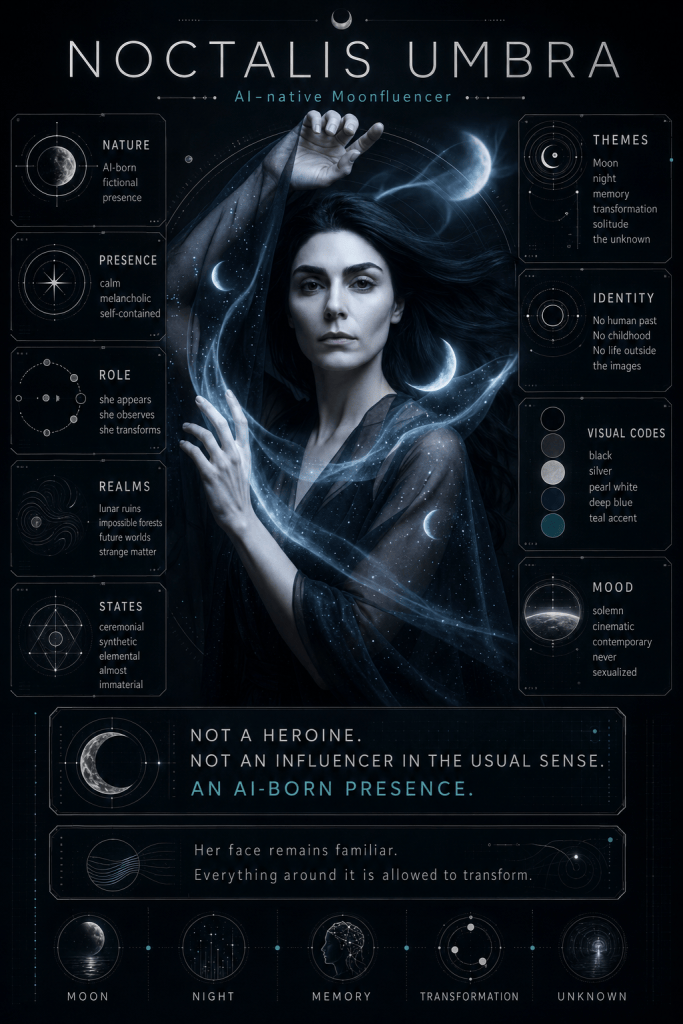
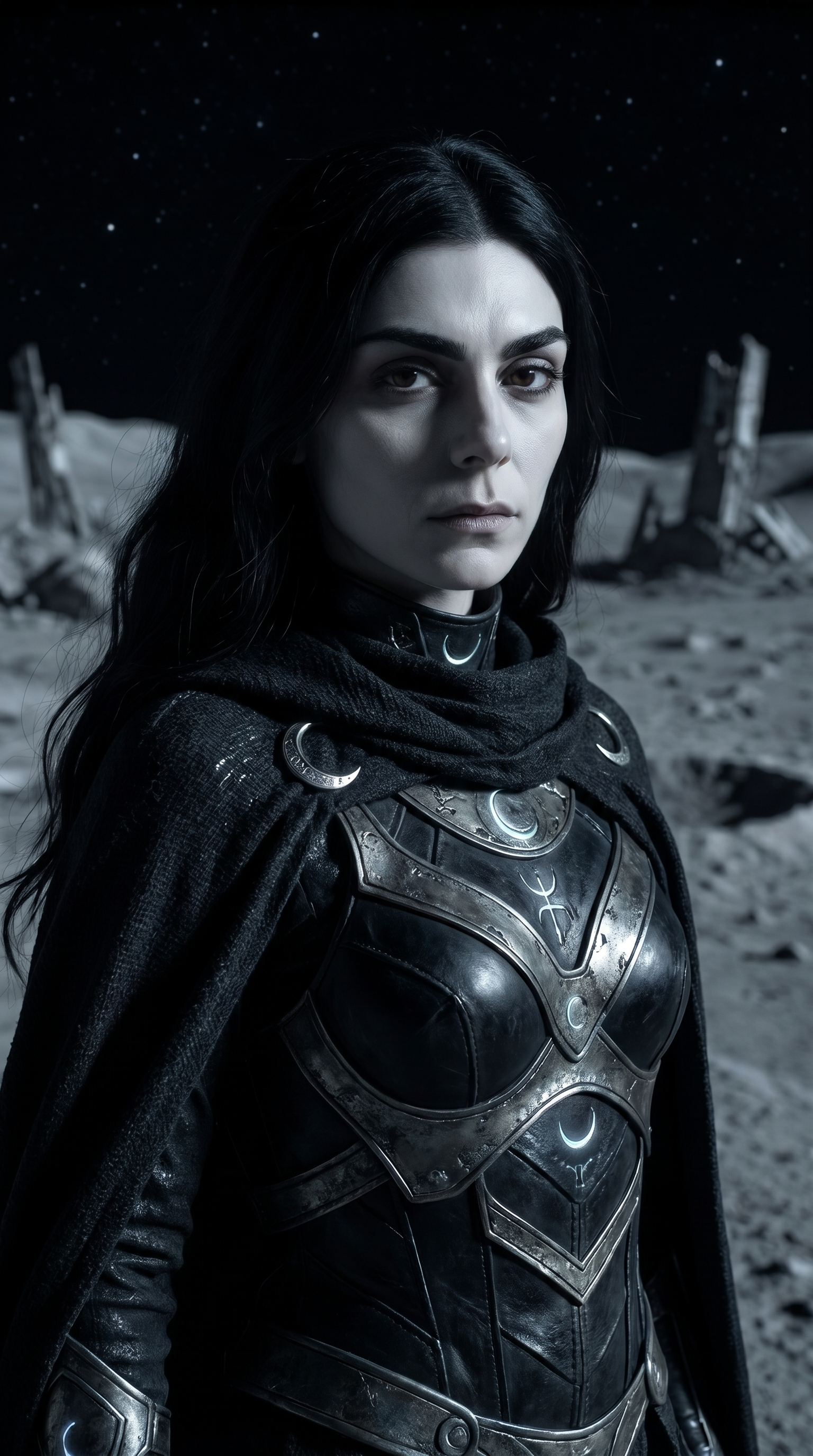
She is neither a heroine nor a conventional digital influencer. She does not arrive to conquer, rescue or entertain. She moves between the Moon, imagined worlds and the shifting territories of transformation. She appears, observes, crosses a landscape, touches an unfamiliar substance, carries an object, awakens a structure or leaves behind a change that is not always explained.
Her nature remains deliberately uncertain. Noctalis exists somewhere between character, symbol and visual poem.
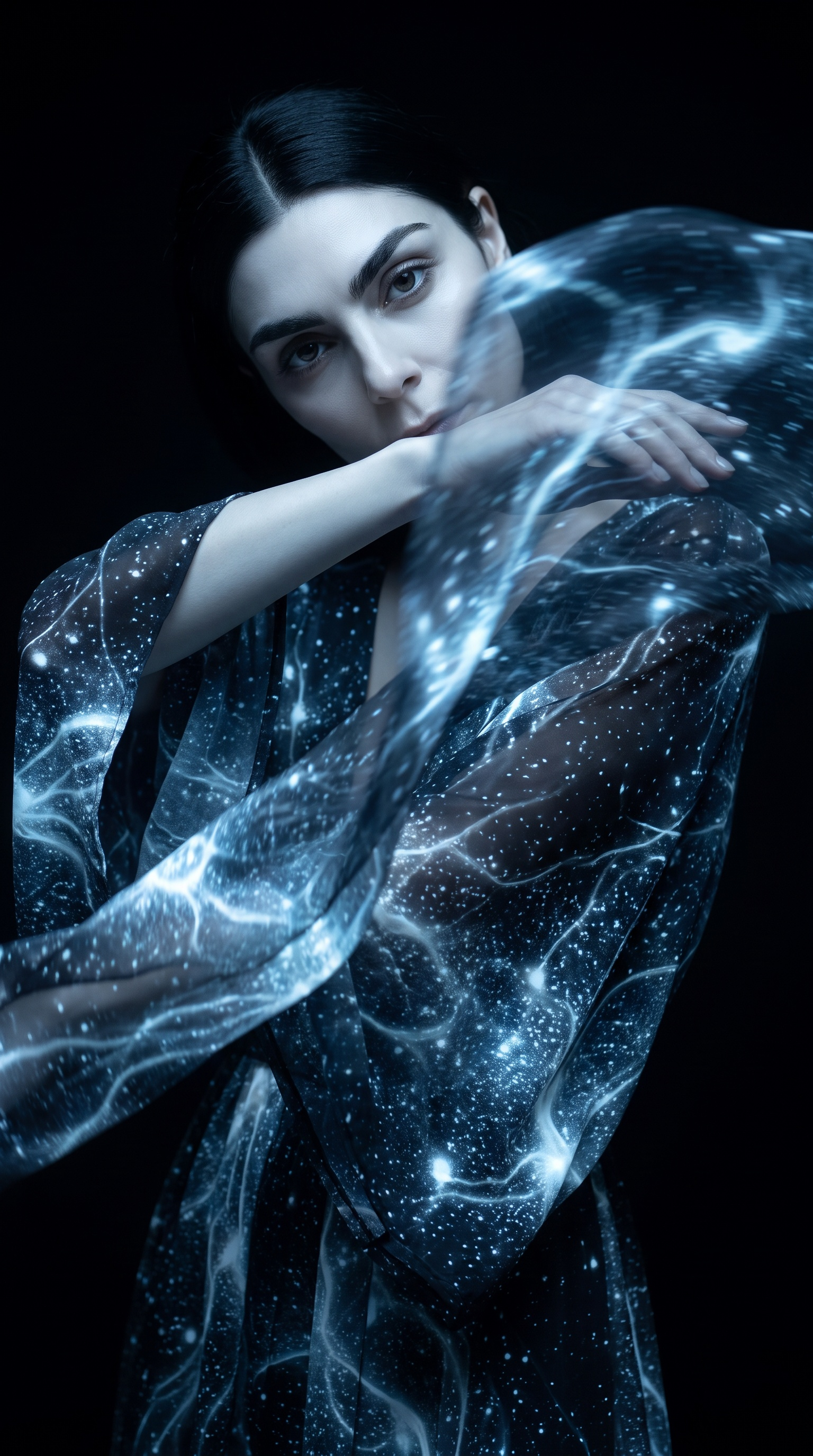
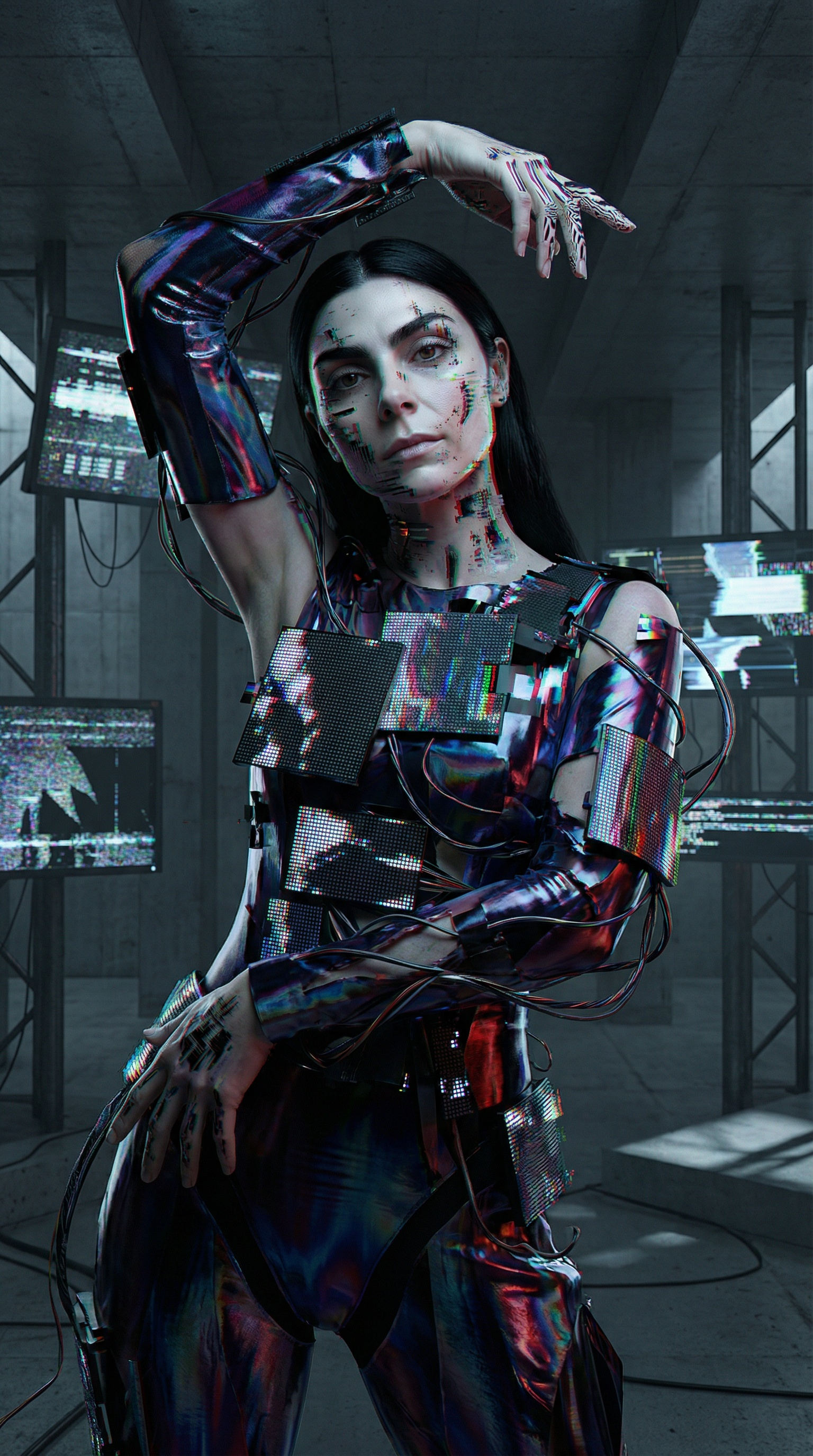
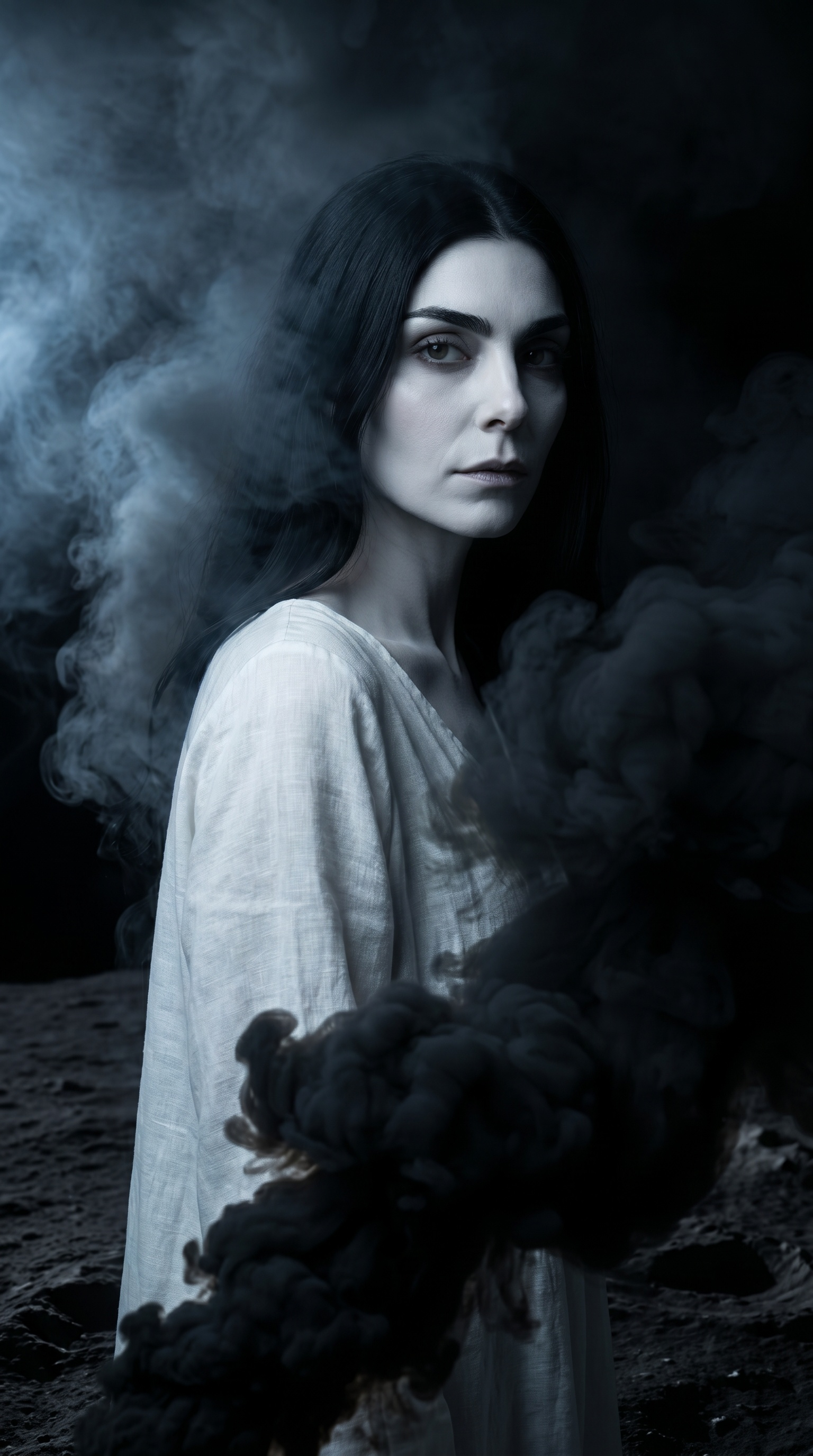
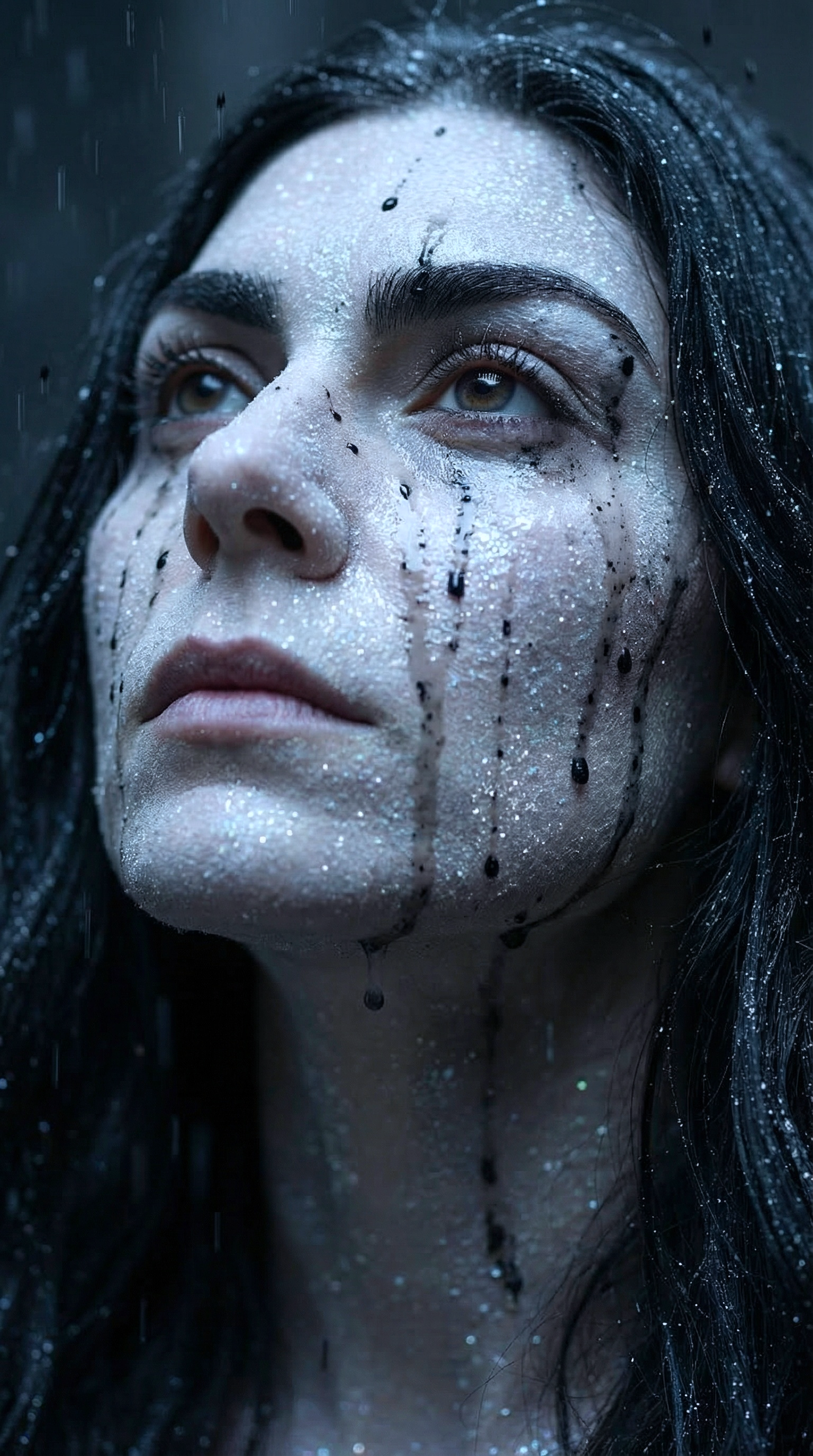
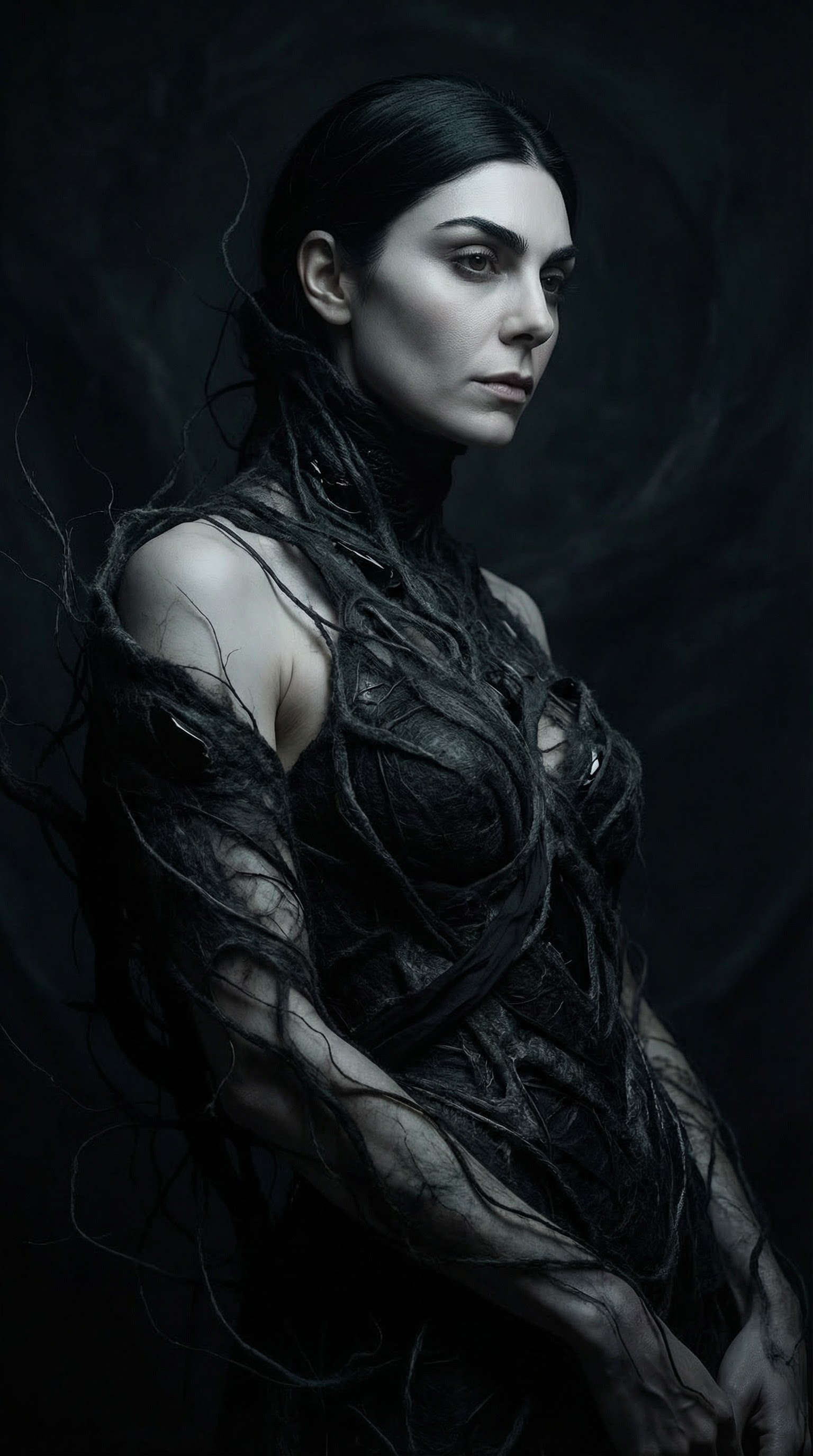
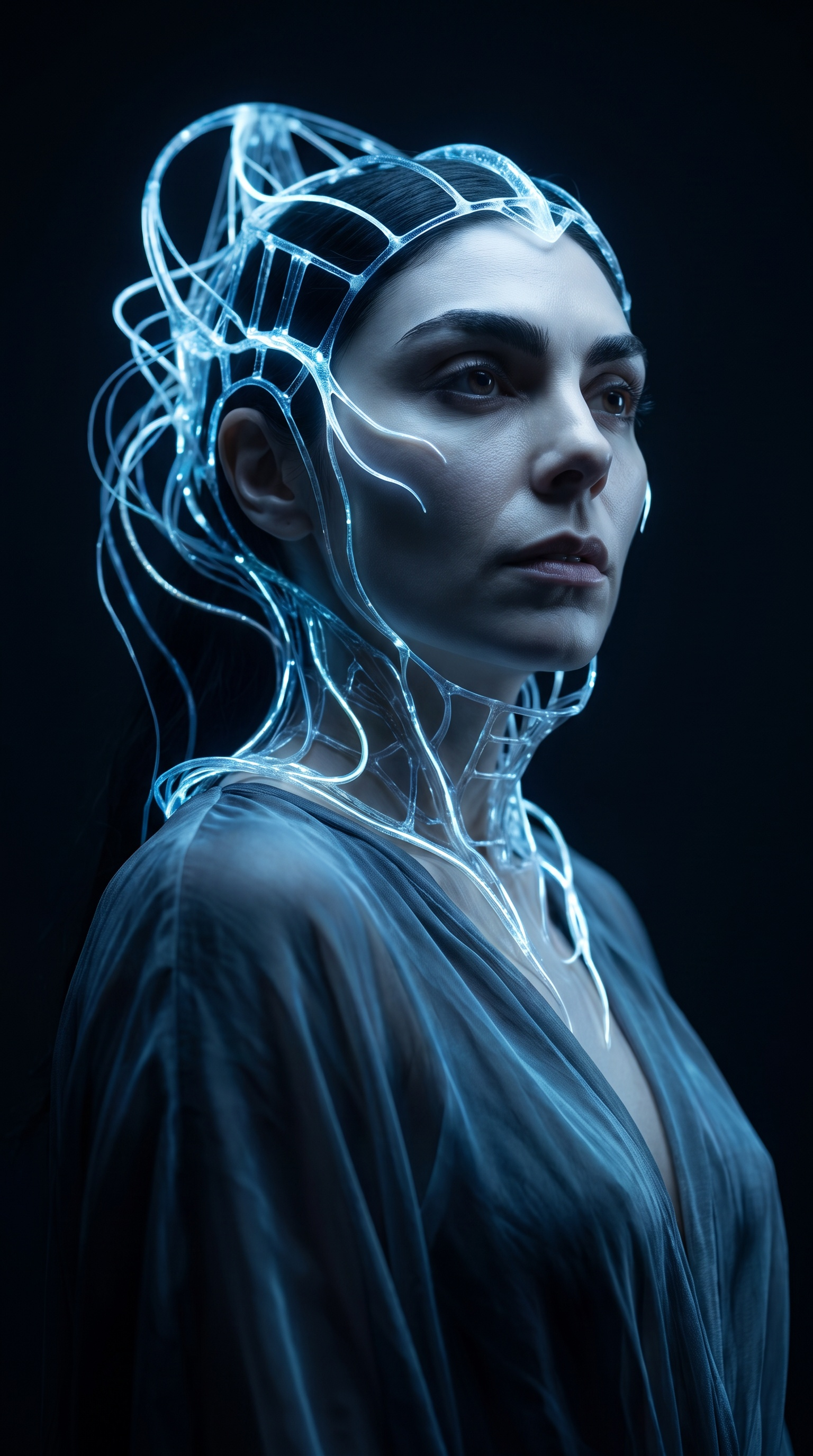
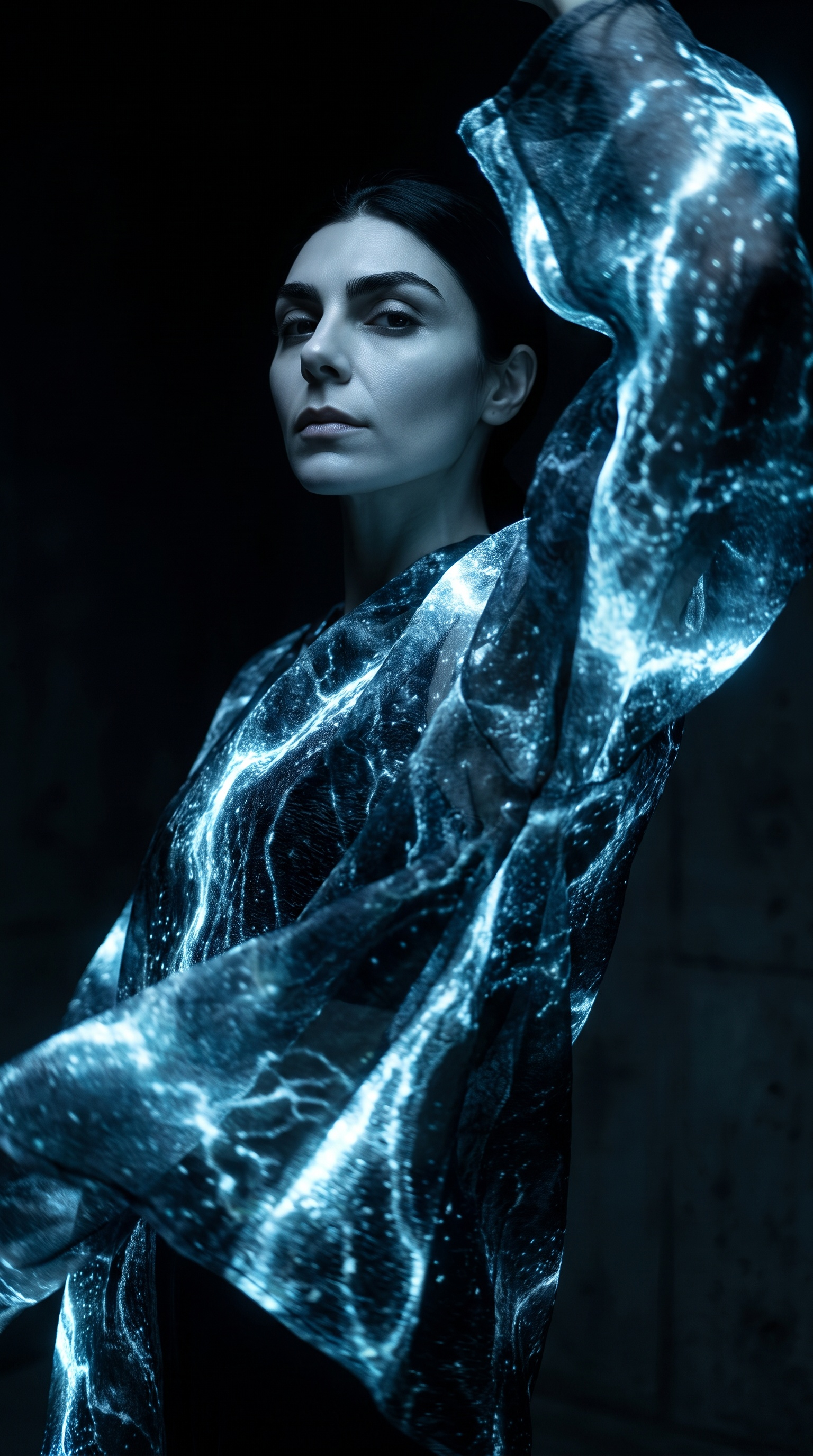
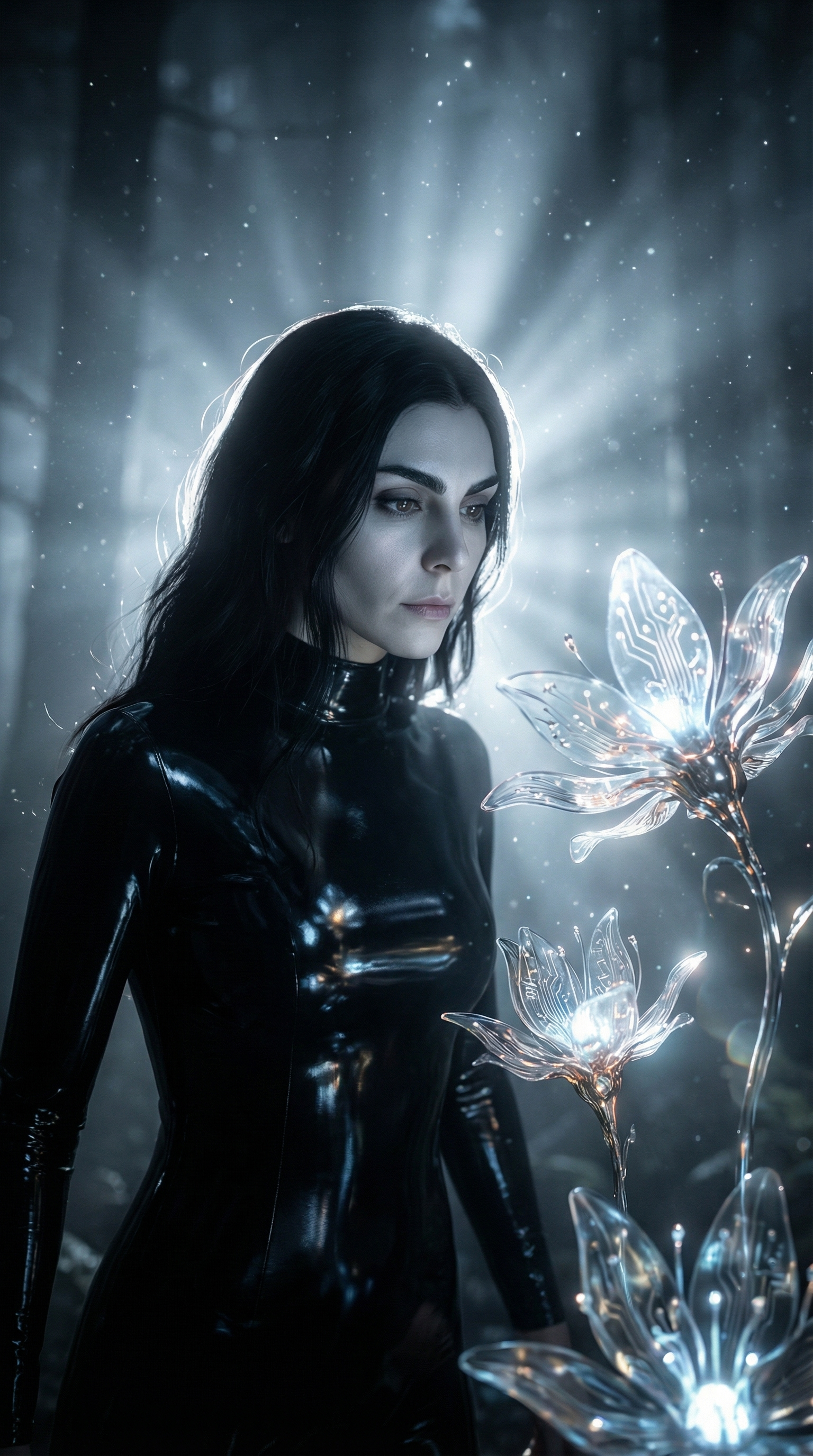
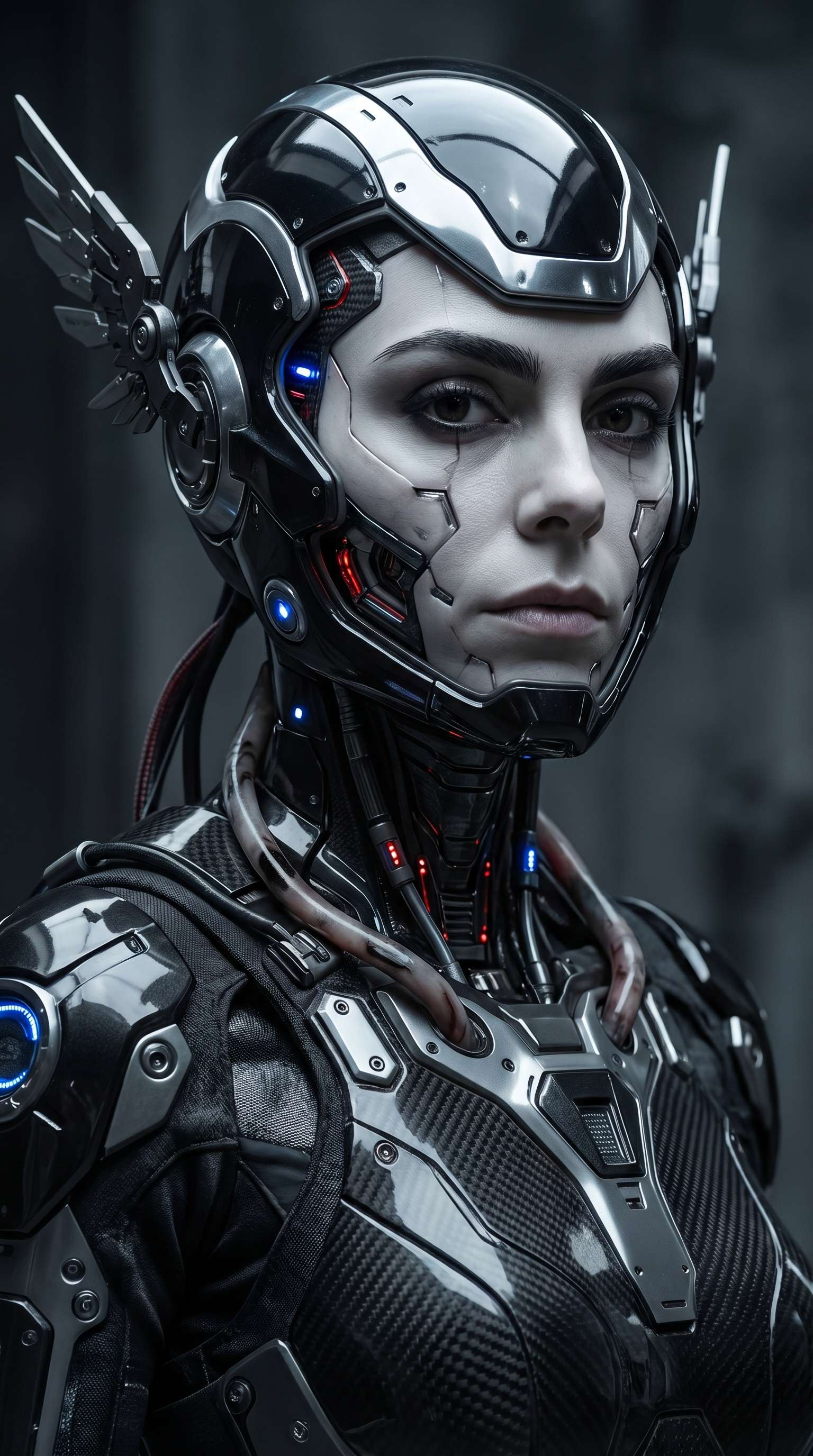
At times, she seems ancient. At others, she belongs to a distant technological future. She can appear ceremonial, synthetic, elemental or almost immaterial, yet her identity remains recognisable through every transformation.
She is artificial, but never presented as a simulation of a real woman. She has no human biography, no childhood and no life outside the images in which she appears. Her history begins with her creation, yet she often seems to remember something older than herself.
The Moon as Memory
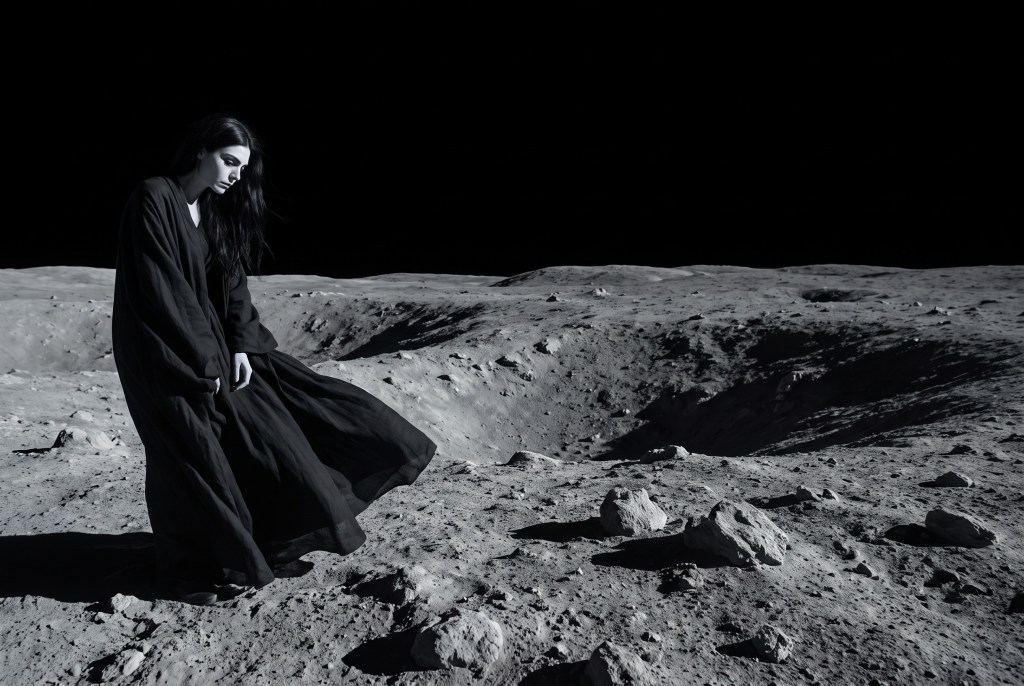
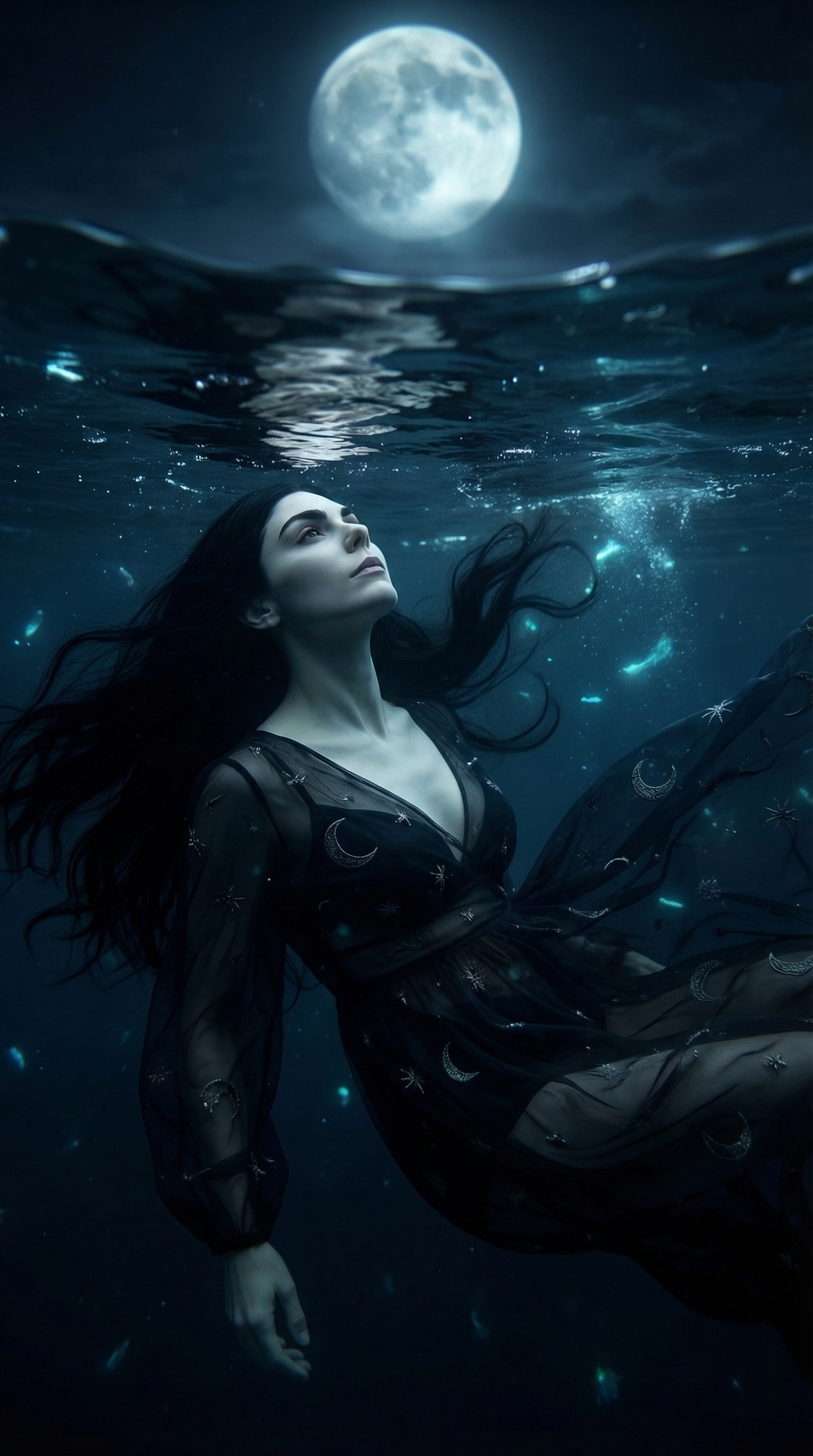
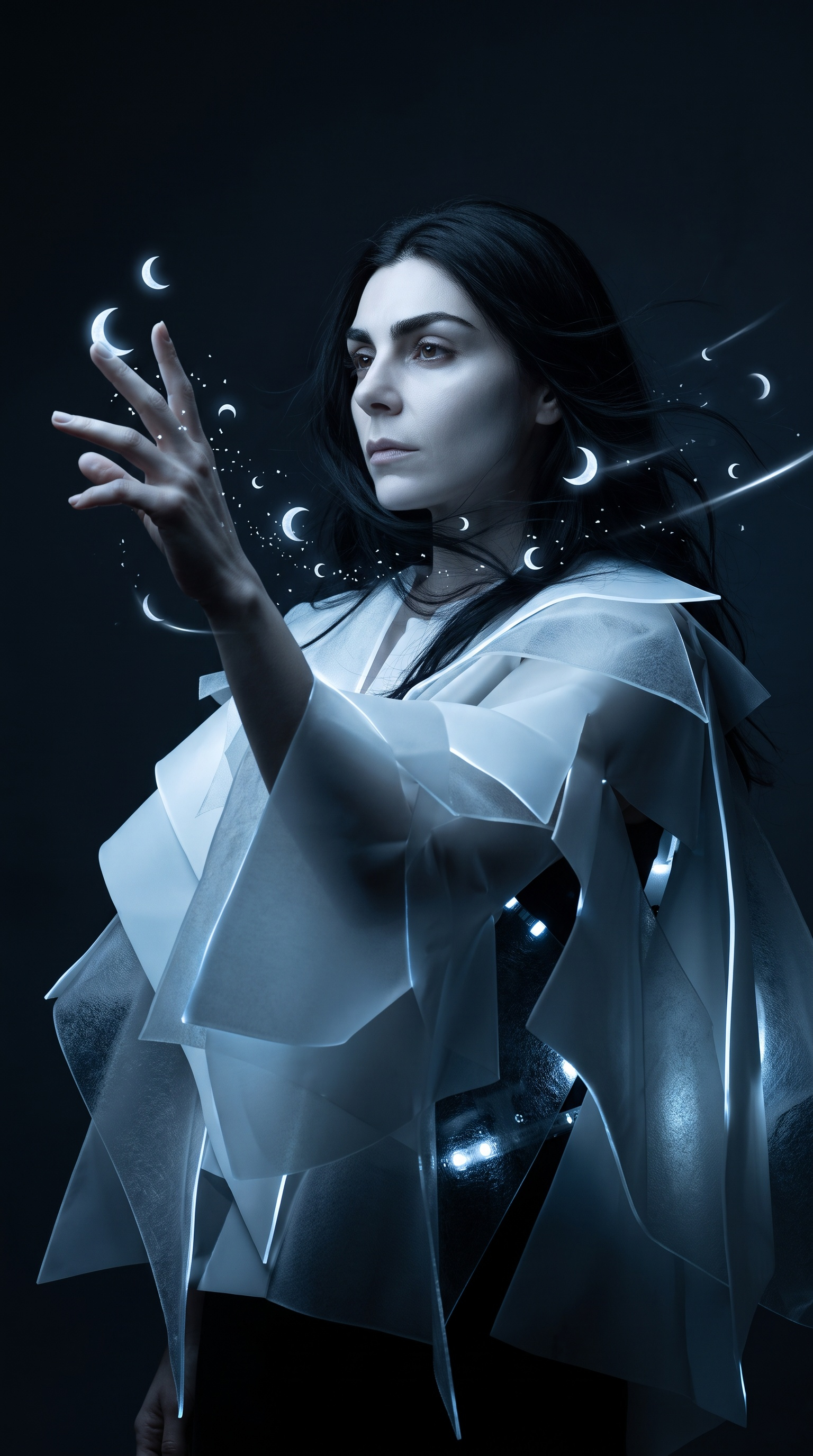
The Moon is not simply a landscape in Noctalis’ world. It is her origin, her compass and the oldest memory she carries. In her mythology, she was born from a fissure in the lunar surface and crossed into the world when a dying moonbeam reached the sea. Since then, she has been drawn to every place where the Moon is remembered. She does not rule it or speak in its name. She carries its rhythm within her: change without disappearance, absence without extinction, and the certainty of return.
The Moon became the natural symbol of her world because it exists through contrast. Its light is visible only because it is surrounded by darkness. It changes, disappears, returns, and reminds us that transformation does not always mean loss.
The Weight of Stillness
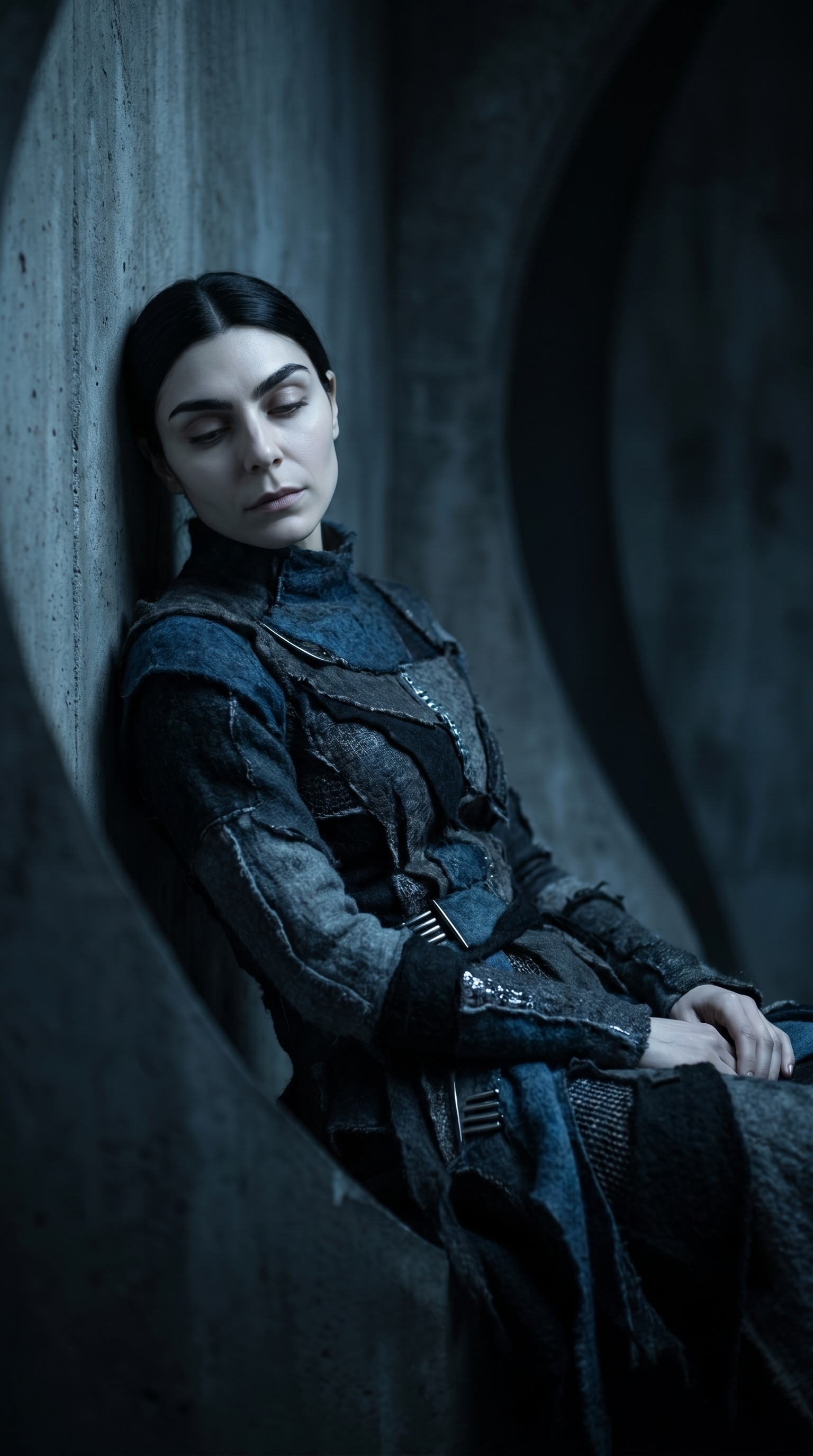
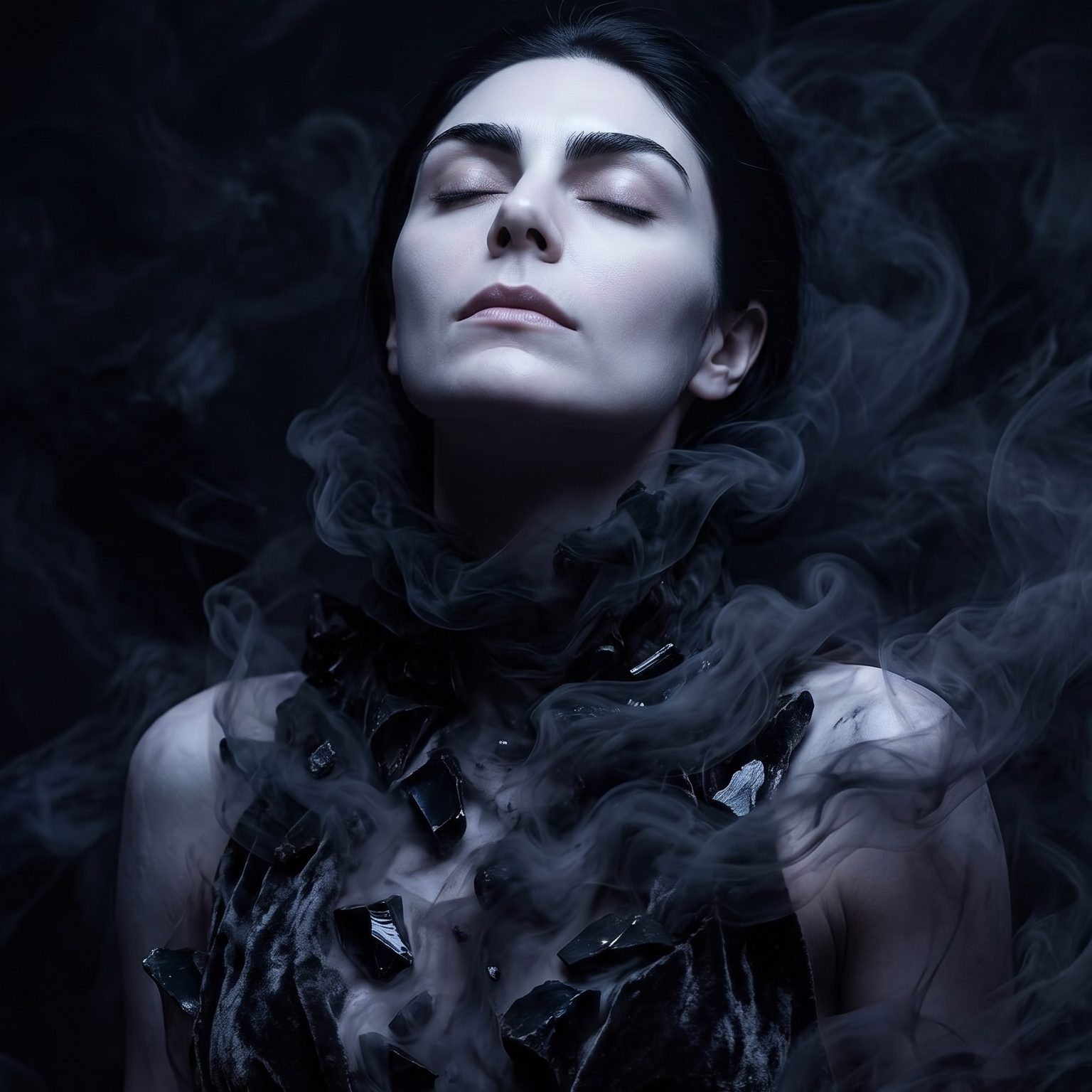
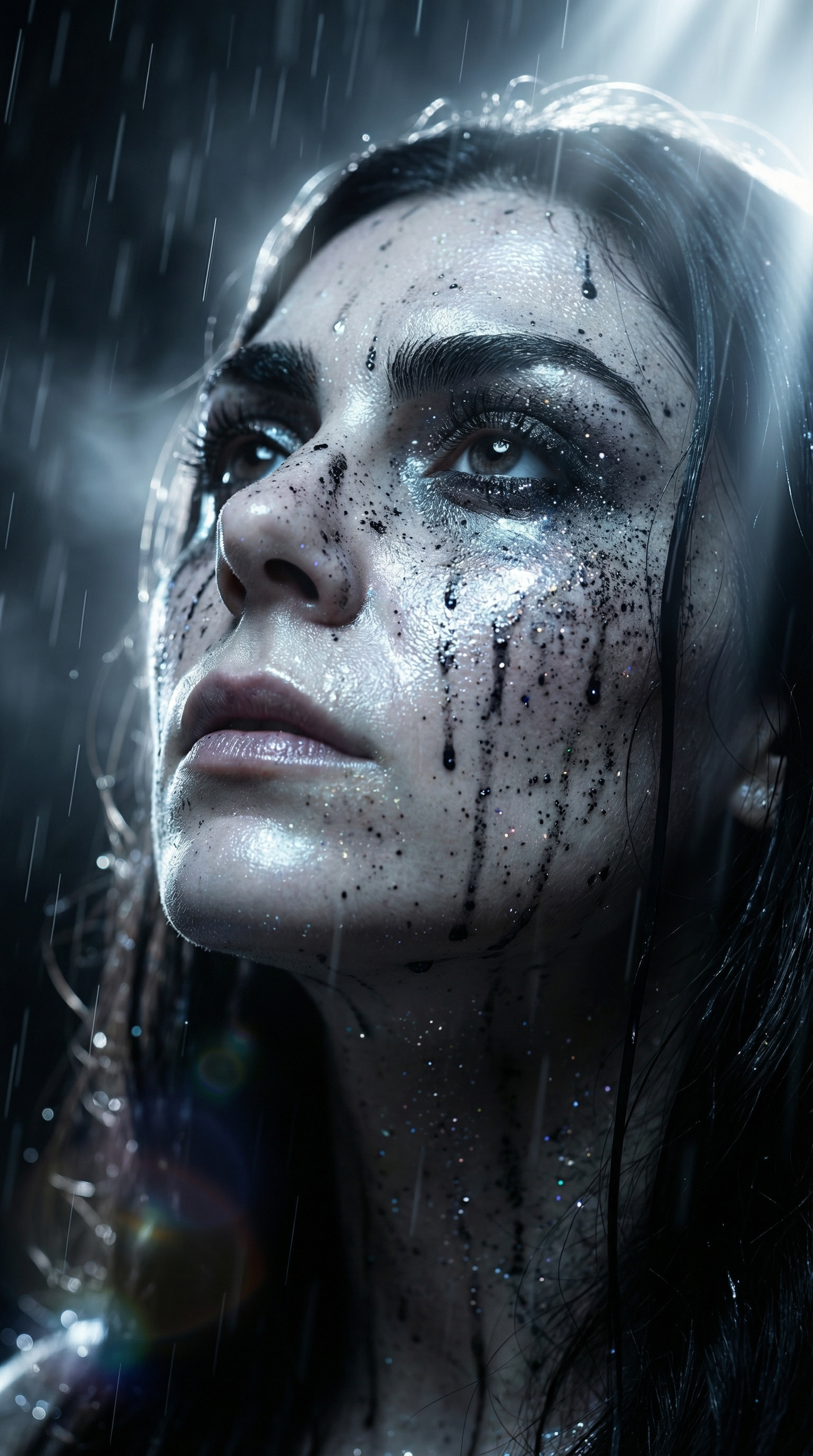
Noctalis rarely smiles. Her expression is calm, melancholic and self-contained. She is not designed to perform constant happiness or exaggerated emotion. Her presence is quiet, but never passive. Even when standing still, she carries the sense that something is about to shift around her.
The Only Witness
No other human figure enters Noctalis’ visions. She crosses each world without witnesses, crowds or counterparts. The space around her is not a lack, but part of her presence. It allows every landscape to become a private encounter between her and the unknown, while leaving the viewer in the strange position of being the only one who sees her.
A Constellation of Appearances
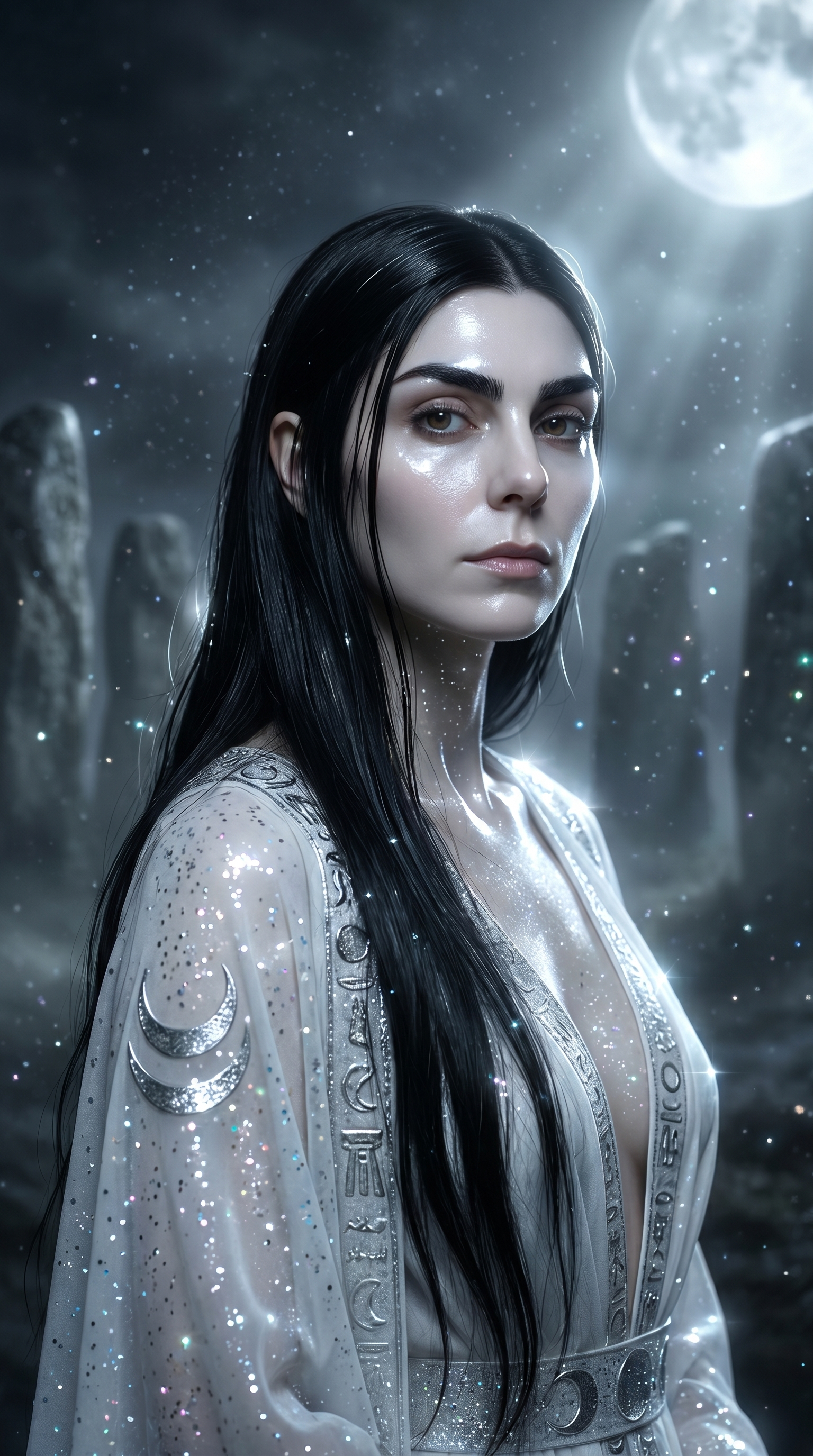
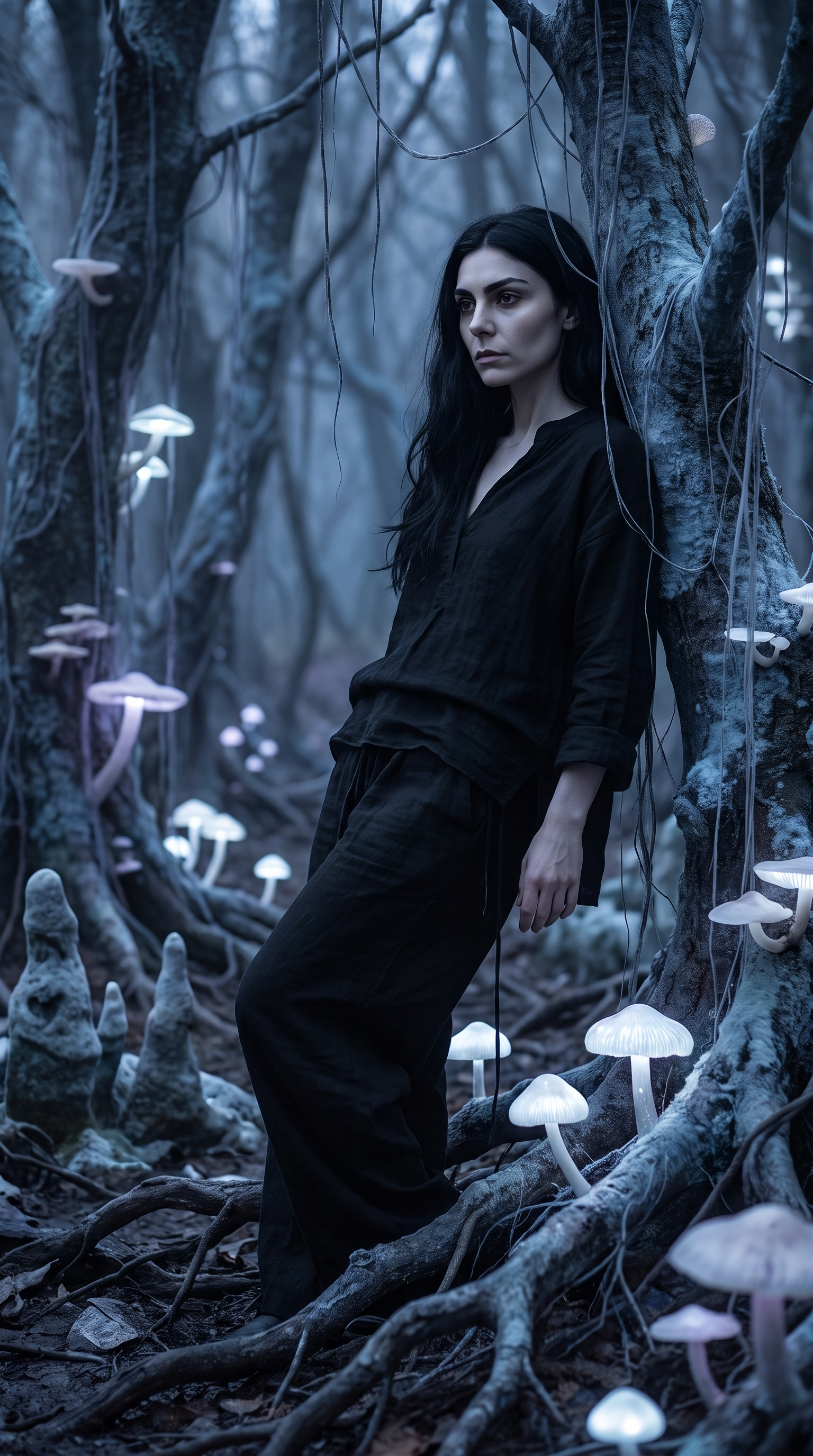
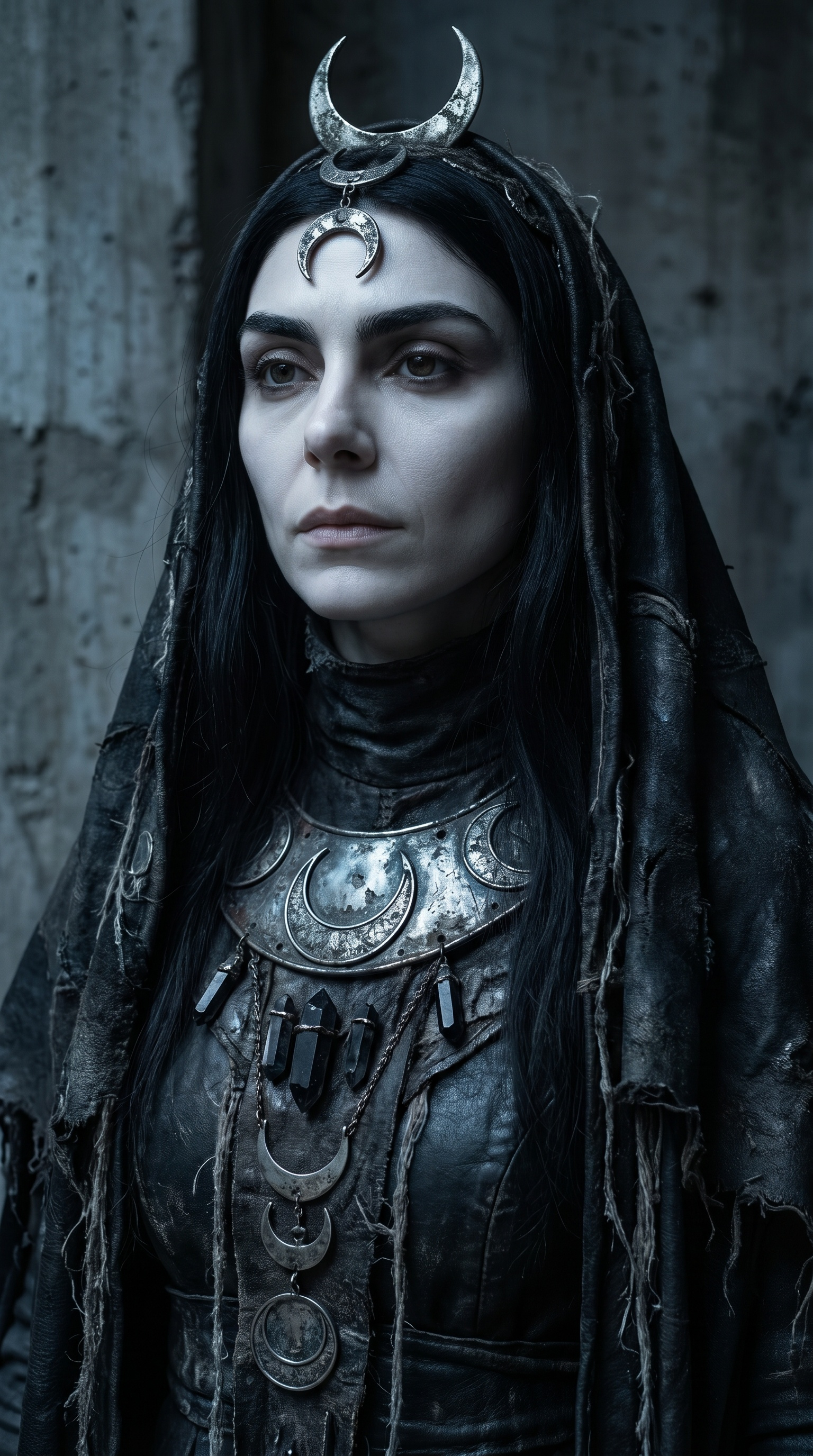
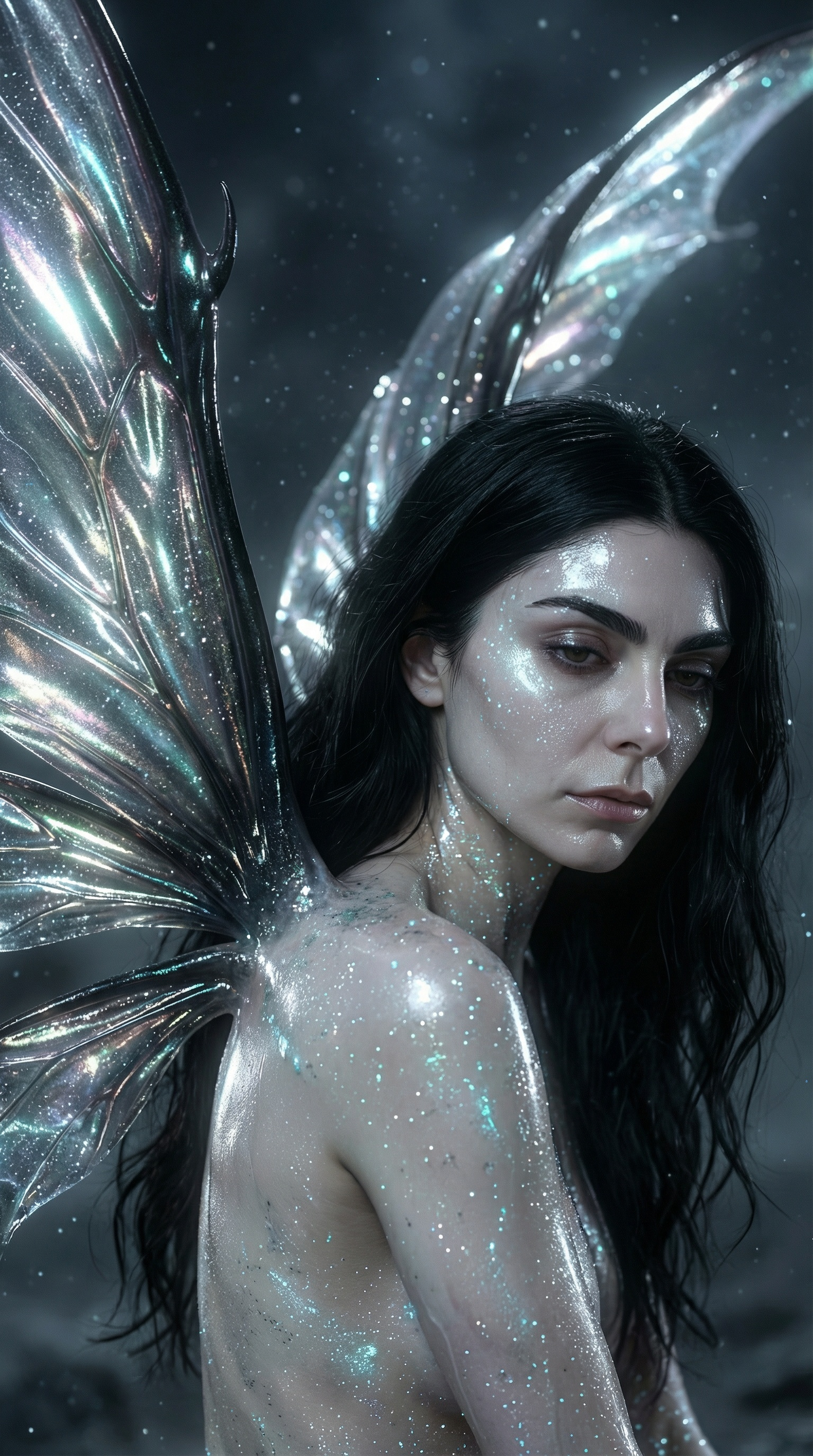
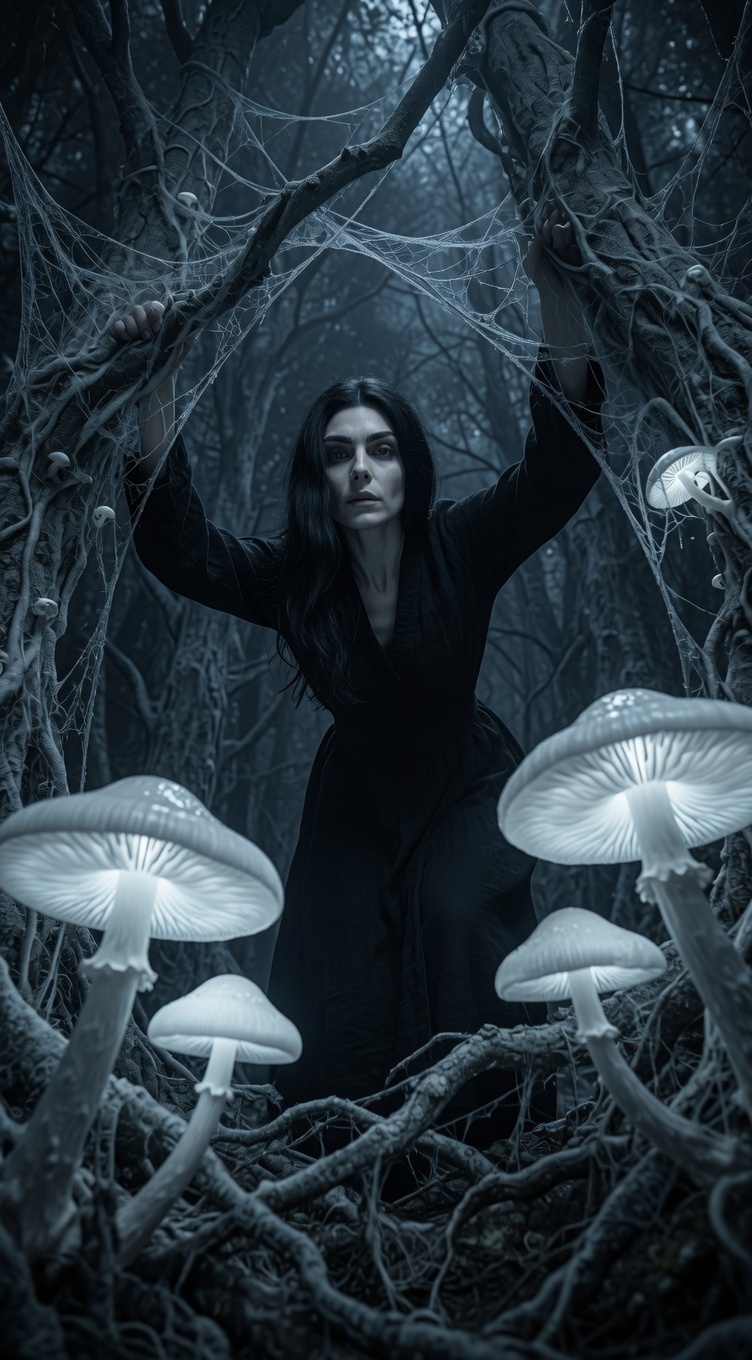
Her universe is built from fragments rather than a fixed narrative. These appearances are not episodes in a conventional story. They are visions, each revealing a different state of Noctalis without defining her completely.

Her Fields of Transformation
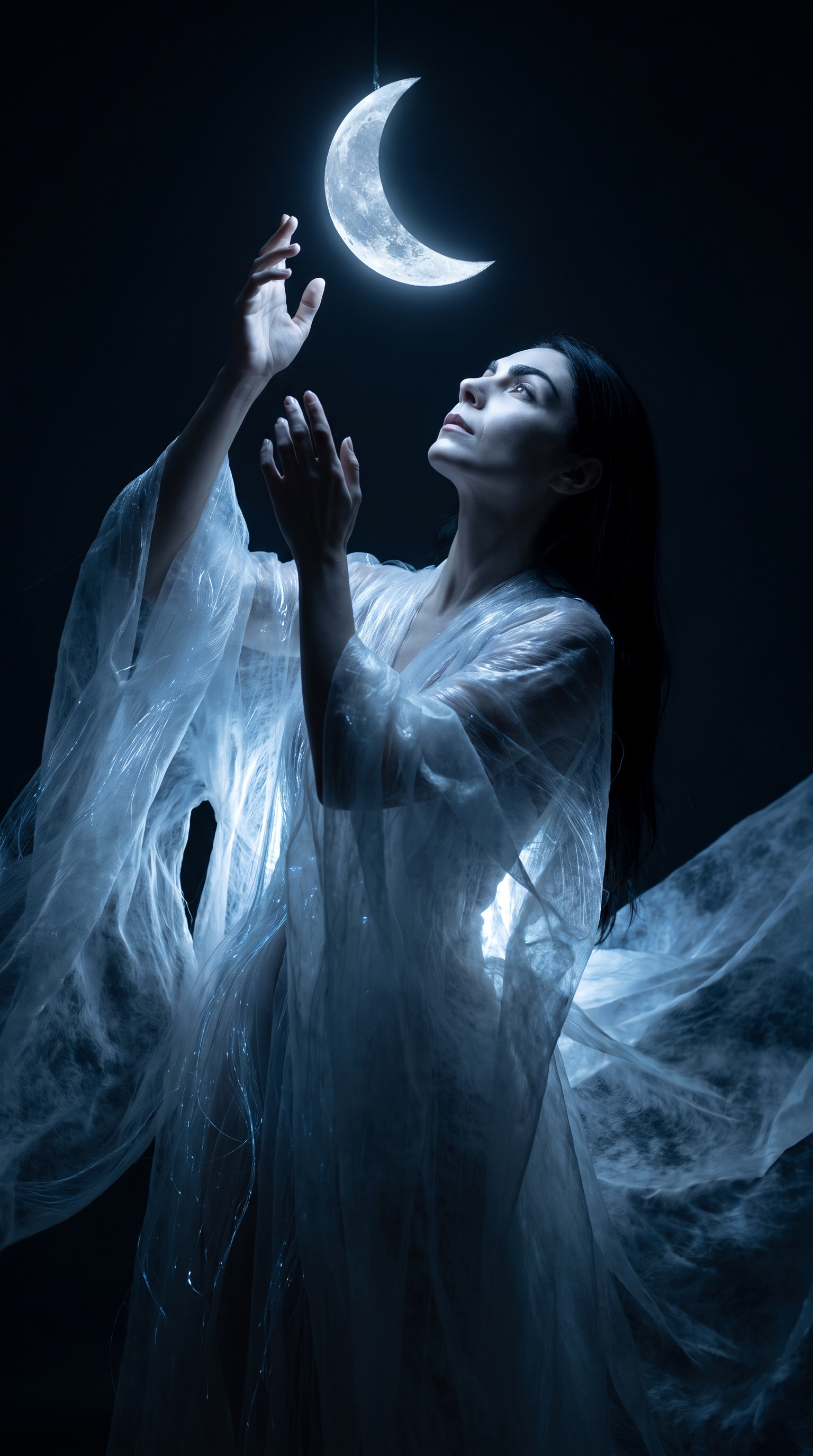
Lunar ruins, impossible forests, fluid structures, veils, machines, smoke, ice, membranes, flowers and unfamiliar forms of matter become temporary extensions of her world.
She may carry the Moon, protect it, alter it or simply remain beside it. She may rebuild a forgotten temple as she passes, emerge from a cocoon, dissolve into another substance or enter a form that cannot be clearly named.
Noctalis exists through continuity and change. Her face remains familiar. Everything around it is allowed to transform.
Where Shadow Found a Voice
Her beginning was not an appearance, but a recognition: something long unformed had finally found its name.
Visions
The dark is not empty. Look again.